Best Outdoor Kitchen Options: Comprehensive Planning And Integration Guide
Best outdoor kitchen options are frequently misidentified as mere collections of high-end appliances, but true functional mastery requires a holistic integration of environment, infrastructure, and human ergonomics. Many homeowners prioritize aesthetic finishes over the foundational systems that determine long-term durability and usability, leading to expensive retrofits. Best Outdoor Kitchen Options. An outdoor kitchen is not simply a charcoal grill set on a patio; it is a complex, exposed-environment culinary system that demands architectural consideration similar to that of an interior remodel.
Best outdoor kitchen options depend heavily on the specific interplay between local climate constraints, the intended frequency of usage, and the existing hardscaping of the property. Selecting the right setup is less about choosing a brand and more about calibrating a configuration to survive atmospheric stressors while facilitating efficient food preparation. This guide examines the underlying principles of outdoor culinary design, moving beyond surface-level trends to provide a structural analysis of how these systems should be planned, built, and maintained.
Understanding the Best Outdoor Kitchen Options
Best outdoor kitchen options often suffer from a perception gap where buyers equate luxury with durability. In reality, the most reliable configurations are those that prioritize material science and environmental management over purely cosmetic features. Common misunderstandings include the assumption that indoor-rated cabinetry or appliances will function seamlessly outdoors. Such oversights often lead to oxidation, warping, and mechanical failure within the first few seasons of exposure.
Evaluating the best outdoor kitchen options requires viewing the project as an engineered assembly. Every module, from the framing members to the ventilation hood, must be specified for exterior use. A failure to account for UV degradation, moisture ingress, or salt-air salinity creates a compounding maintenance burden. True efficacy in this space is measured by the longevity of the infrastructure and the ease of the transition from indoor hosting to outdoor execution.
Deep Contextual Background
The evolution of outdoor food preparation has moved from rudimentary charcoal pits to fully plumbed, electrically integrated cooking environments. Historically, post-war suburban expansion popularized the freestanding kettle grill, establishing a cultural link between leisure and open-air cooking. This paradigm remained largely unchanged until the late twentieth century, when high-end interior kitchen design began to spill over into the architectural planning of residential backyards.
As property owners demanded a seamless lifestyle transition between interior spaces and exterior landscapes, the need for structurally permanent solutions arose. Early attempts at permanent outdoor structures often relied on standard framing materials protected only by tile or stone veneer. These methods frequently failed in regions with severe freeze-thaw cycles, driving the industry toward specialized polymer cabinetry and welded steel sub-structures. Today, the outdoor kitchen is recognized as a distinct architectural discipline requiring advanced mechanical, electrical, and plumbing engineering.
Conceptual Frameworks and Mental Models
To navigate the design process effectively, one should employ established mental models that prioritize functionality. These frameworks allow for consistent decision-making regardless of the project scale.
The Thermodynamic Zone Model
This approach categorizes space by temperature and utility. Hot zones (grills, side burners), cold zones (refrigeration, ice storage), and neutral zones (prep counters, sinks) must be physically separated to ensure safety while remaining logistically connected. Proper physical spacing must be maintained to prevent high-output grills from warming nearby beverage centers, which decreases appliance life.
The Environmental Exposure Spectrum
Every site exists on a gradient between sheltered and exposed. A fully covered, walled pavilion requires completely different building codes and ventilation systems than an open-air deck. This model dictates the necessity of mechanical ventilation hoods and the grade of stainless steel required for hardware based on overhead coverage.
The Traffic Flow Vector
Outdoor kitchens often become the bottleneck of social gatherings. Analysis of guest circulation paths—ensuring the cook is neither isolated nor obstructed—is critical to preventing the kitchen from becoming a hazard during peak entertaining hours. Service entry points should always remain distinct from guest congregating areas.
Key Categories or Variations
The configuration of the workspace defines how the culinary system functions under pressure. Each material framework and structural shape has inherent strengths and limitations related to space usage, environmental resilience, and cost.
| Configuration Type | Structural Core Material | Spatial Efficiency | Climate Resilience |
| Prefabricated Modular | Aircraft-Grade Aluminum | High | Excellent (Anti-Corrosion) |
| Custom Masonry | Concrete Block / Stone | Low | High (Requires Deep Footings) |
| Marine-Grade Polymer | HDPE (High-Density Polyethylene) | High | Outstanding (UV Resistant) |
| Stainless Steel Modular | 304 or 316 Grade Steel | Medium | High (Requires Maintenance) |
Prefabricated Modular Systems
Prefabricated units offer rapid deployment and engineered consistency. Because they are manufactured in controlled factory environments, tolerances are tight and appliance cutouts are precise. However, they lack the absolute design flexibility required for irregular, non-standard structural footprints.
Custom Masonry
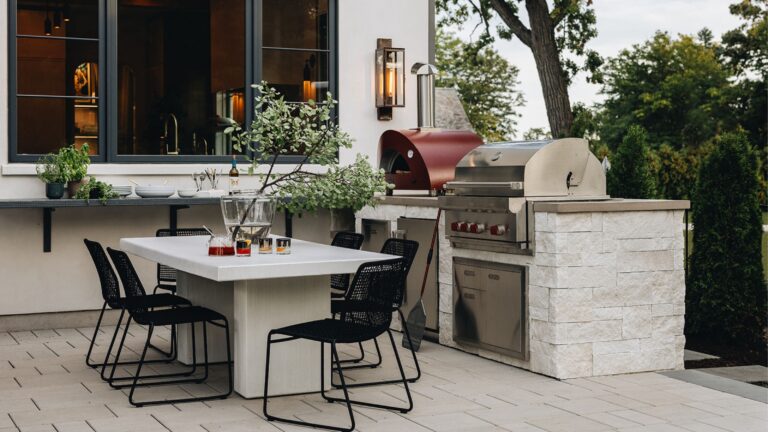
Custom masonry provides unparalleled architectural integration, allowing the structure to match the existing stone or brickwork of the main residence. The trade-off is extreme weight and labor intensity. A poured concrete foundation dug below the local frost line is mandatory to prevent shifting over time.
Marine-Grade Polymers (HDPE)
High-density polyethylene cabinets are impervious to water, rot, and insects, making them highly effective in coastal zones. They can be hosed down entirely during cleaning cycles. Their main limitation relates to thermal expansion, requiring careful clearance gaps around built-in high-heat cooking appliances.
Stainless Steel Systems
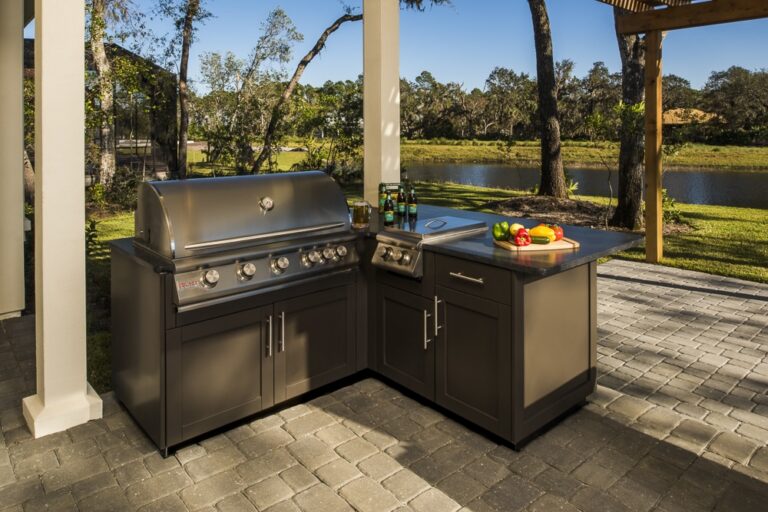
Stainless steel provides a commercial, professional appearance that resists high temperatures effortlessly. However, without regular cleaning and application of protective oils, it remains susceptible to cosmetic staining, tea-staining, and pitting from atmospheric salt or chlorine pools.
Detailed Real-World Scenarios Best Outdoor Kitchen Options
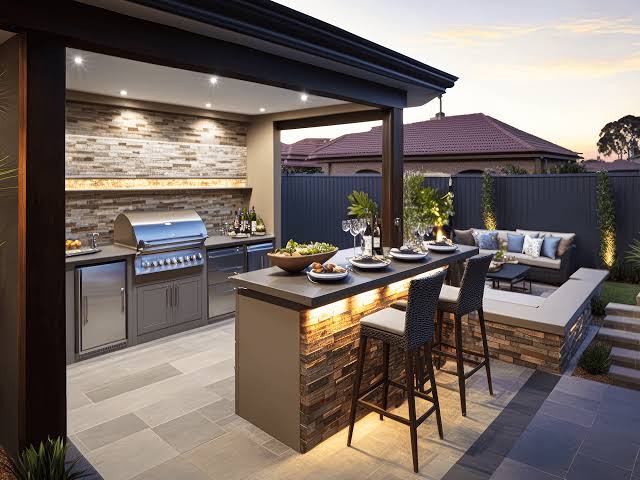
The selection of a configuration should follow a logical path based on site constraints rather than purely aesthetic aspirations.
High-Wind Coastal Zone
In this environment, salt-spray corrosion and structural wind loads are the primary threats. A custom masonry framework clad in local natural stone, fitted exclusively with marine-grade 316 stainless steel components, represents the most stable choice. Structural failure occurs when standard 304-grade steel is used, leading to extensive rust pitting within eighteen months. Second-order effects include the regular degradation of electrical control boards within refrigerators due to salt air intrusion.
Urban Rooftop Terrace
Weight limits and tight access paths govern urban high-rise installations. Prefabricated aluminum or modular polymer systems are selected because they can be transported via standard service elevators and do not overload structural floor joists. A masonry solution here would cause structural overloading. The primary hazard is wind uplift, requiring the modules to be mechanically anchored directly to the building’s structural steel or concrete deck.
High-Freeze Northern Suburbia
Regions with extreme temperature swings from summer to winter demand materials that accommodate dramatic thermal contraction and expansion. Poured concrete countertops without structural expansion joints will crack during winter thaws. Stainless steel modular framing coupled with thick granite slab counters provides the necessary flexibility. The primary mechanical failure mode is water lines freezing, which requires a dedicated low-point drain system to blow out lines before winter sets in.
Planning, Cost, and Resource Dynamics
Investment in an outdoor kitchen is characterized by high upfront infrastructure costs, often accounting for 40% to 60% of the total project expenditure. These costs are rarely visible in the final aesthetic but are the primary drivers of long-term reliability.
| Project Component | Budget Allocation Range | Primary Cost Drivers |
| Sub-structure & Framing | 20% – 30% | Material choice (HDPE vs. Concrete Block) |
| Utility Extensions (Gas/Water/Elec) | 15% – 35% | Trenching distance, utility panel upgrades |
| Appliances & Ventilation | 25% – 45% | BTU outputs, commercial grade certifications |
| Countertops & Finishes | 15% – 25% | Fabrication labor, material rarity (Granite/Quartzite) |
Trenching for natural gas lines and dedicated 20-amp electrical circuits over long distances can easily exceed the cost of the grill itself. If an existing electrical panel lacks the capacity to support an outdoor induction burner or warming drawer, an expensive panel upgrade must be executed by a licensed electrician before any hardscaping begins.
Tools, Strategies, and Support Systems
Executing an outdoor kitchen build requires a clear understanding of the regulatory and mechanical dependencies involved.
-
Utility Permitting Matrix: A structural map detailing municipal setback requirements, gas pipe sizing criteria, and backflow prevention protocols.
-
High-CFM Vent Hoods: Essential for installations under covered patios to prevent toxic smoke buildup and grease staining on ceilings.
-
Dedicated Winterization Valves: Easily accessible shut-off mechanisms placed within the thermal envelope of the main home to isolate exterior water lines.
-
Adjustable Leveling Legs: Heavy-duty, corrosion-proof feet on modular cabinetry that compensate for the natural slope required for patio drainage.
-
GFI Circuit Breakers: Code-mandated electrical safety switches designed specifically to cut power instantly when moisture interferes with outdoor outlets.
Risk Landscape and Failure Modes
The long-term degradation of an outdoor kitchen is rarely caused by a single catastrophic event; rather, it is driven by compounding environmental factors. Moisture accumulation remains the primary catalyst for system failure.
When counters are sealed incorrectly, water seeps into the underlying substrate. If wooden structural components are hidden behind stone veneer, this trapped moisture creates a micro-climate that promotes fungal decay and wood rot. Over time, the structural framing sags, causing stone panels to detach and granite countertops to snap under uneven stress distributions.
Governance, Maintenance, and Long-Term Adaptation
Long-term preservation requires a structured review cycle, ideally conducted twice annually in the spring and autumn. This programmatic approach ensures that minor component wear is addressed before it translates into systemic failure.
Pre-Season Inspection Checklist
-
Gas Integrity: Apply a water-and-soap solution to all gas line connections while pressurized to check for expanding bubbles indicative of micro-leaks.
-
Drainage Clearance: Flush sink drains with hot water and clearing agents to remove biological debris or winter pests that may have nested in the lines.
-
Sealer Application: Apply an exterior-grade fluoropolymer sealer to all natural stone countertops to prevent grease penetration and staining during summer usage.
-
Appliance Thermals: Power on refrigeration units and verify that the condenser coils are clear of dust, leaves, and spiderwebs to ensure proper heat rejection.
Measurement, Tracking, and Evaluation
Evaluating the structural health of an outdoor kitchen relies on tracking both immediate physical indicators and long-term structural changes.
-
Leading Indicators: Monthly monitoring of refrigerator power consumption anomalies (indicating failing seals or clogged coils) and the immediate appearance of hairline fractures in masonry grout lines.
-
Lagging Indicators: Structural shifts measured by a digital level across countertop planes over a rolling three-year period, indicating foundation settling or structural decay.
Diagnostic Documentation Example
When logging a maintenance event, entry formats must remain precise to trace recurring environmental vulnerabilities
Common Misconceptions and Oversimplifications
The most pervasive myth in outdoor kitchen design is that any material labeled “stainless steel” is completely immune to rust. Consumers often purchase inexpensive 430-grade steel components, only to discover structural corrosion within a year. True exterior longevity requires a minimum of 304-grade steel, while coastal areas require 316 marine-grade steel.
Another frequent error is the omission of proper ventilation loops within enclosed cabinet spaces. Natural gas and propane are heavier than air or can pool in enclosed cavities if a leak occurs. Without ventilation louvers built into the sides of masonry islands, pockets of gas can accumulate near the floor of the structure, creating a major explosive hazard when the grill igniter is pressed.
Conclusion
Selecting the best outdoor kitchen options requires moving past cosmetic appeal and focusing on material compatibility and structural engineering. The long-term value of an outdoor kitchen is fundamentally tied to how effectively it manages the challenges of water, wind, and temperature shifts. By anchoring the design process in robust structural frameworks, using premium materials suited to the local climate, and maintaining a regular upkeep schedule, homeowners can create an enduring outdoor cooking space that performs exceptionally for decades.