Best Prefab Outdoor Kitchen Plans: Expert Engineering Guide
The integration of modular culinary hardware into exterior residential spaces represents a significant shift in modern site development. Prefabricated systems offer a predictable, engineering-led alternative to traditional, site-built masonry. Best Prefab Outdoor Kitchen Plans. By utilizing factory-certified frames and appliances, designers eliminate the variability inherent in field construction. This approach ensures that technical tolerances for gas, electrical, and drainage are strictly maintained from the start of the project.
High-performance outdoor living depends on the precise reconciliation of appliance output with site infrastructure. Modular kits allow for the rapid deployment of complex workstations while minimizing the disruption associated with custom builds. Success requires a deep understanding of structural load capacities, thermal management, and material fatigue. Professionals who treat the exterior as a refined mechanical environment achieve superior outcomes that withstand the test of time.
This analysis provides a comprehensive framework for selecting and implementing modular exterior configurations. It examines the physics of environmental endurance, the necessity of rigorous utility planning, and the long-term governance of these assets. By focusing on technical accuracy rather than superficial design trends, this reference serves as a definitive resource for property owners seeking to build enduring, high-utility environments.
Understanding “best prefab outdoor kitchen plans”
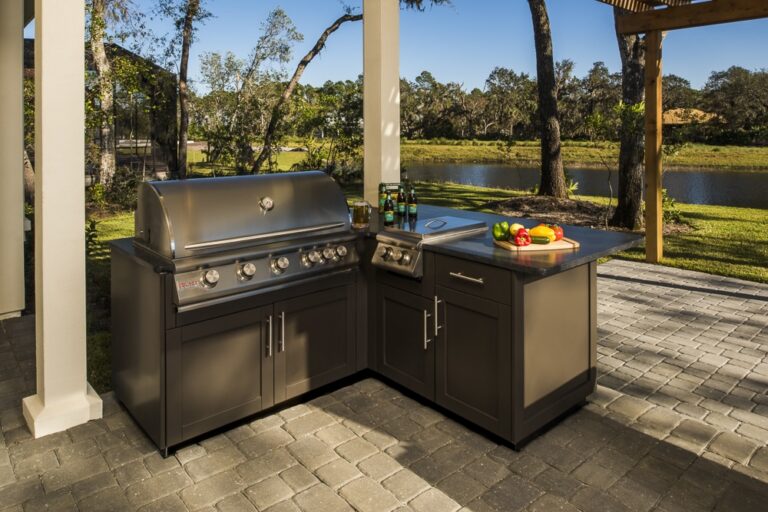
When engineering experts identify the best prefab outdoor kitchen plans, they look for standardized frameworks that allow for easy utility integration. A primary error in the industry involves the selection of kits based solely on aesthetics. True quality is found in the hidden structural members and the quality of the protective finish. Builders must analyze the kit’s ventilation capacity, as internal heat buildup is the primary driver of electronic component degradation in enclosed exterior islands.
The Dangers of Structural Oversimplification
Prefabricated designs are often marketed as “plug-and-play,” yet this simplicity masks the requirement for stable footings. If the underlying pad is not level or capable of supporting the dead load, the modular frame will experience racking. This deformation compromises the alignment of doors and drawers, leading to functional failure. Designers should always perform a site-specific soil and pad evaluation before final delivery of any prefabricated component.
Systematic Integration and Utility Routing
The efficiency of a kitchen is determined by the layout of its utility nodes. Prefabricated systems must be compatible with existing gas, electrical, and plumbing lines. Experts prioritize kits that offer centralized manifold access, as this simplifies the maintenance of service lines. By aligning the system’s output with the capacity of the home’s main utility grid, designers ensure that the kitchen performs safely and consistently under heavy operational loads.
Deep Contextual Background of Modular Systems
The development of modern prefabricated exterior kitchens mirrors the broader evolution of industrialized home construction. Early exterior setups were characterized by inconsistent masonry and makeshift equipment. The shift toward precision-engineered modular systems was fueled by the rise of high-grade, corrosion-resistant steel and UV-stable polymers. This industrialization of the backyard space has fundamentally changed the expectations for residential project timelines and build quality.
Alloy Science and Structural Longevity
Modern modular kits rely on advanced alloy science to guarantee survival in unconditioned environments. The transition from basic carbon steel to marine-grade stainless alloys allowed for the creation of permanent, weather-resistant structures. These materials are engineered to maintain their structural integrity despite constant thermal cycling. This technical maturation has effectively moved exterior kitchens from the realm of seasonal hobbyist setups into professional-grade culinary environments.
Industrialization of Residential Landscapes
The demand for rapid, high-quality site installation led manufacturers to refine their production processes. Standardized framing members now allow for rapid on-site assembly, reducing the time required for major construction. This shift reflects a systemic preference for predictable, high-value outcomes in residential exterior projects. As residential design continues to prioritize functional, all-weather spaces, the importance of these engineered solutions will only increase.
Conceptual Frameworks for Modular Stewardship
The Thermal Equilibrium Model
Modular islands must manage heat concentration. Engineers specify fire-rated jackets for all high-output burners. This framework ensures that the structural frame is shielded from direct thermal radiation, extending the functional life of the appliance and the surrounding island body.
The Moisture Evacuation Paradigm
This framework treats the island as a breathing structure. Because exterior environments vary in humidity, air must be allowed to circulate freely behind panels. Passive louvers and internal drainage channels ensure that condensation is quickly dispersed. By keeping internal components dry, this approach prevents the formation of mold and the corrosion of electrical junctions.
The Modular Load-Bearing Analysis
Engineers evaluate the dead load of every appliance relative to the kit’s chassis strength. High-performance kits are designed to support heavy equipment without deformation. This mental model prevents the structural sagging that is common in lower-quality, non-engineered outdoor systems.
Key Categories and Variations of Construction
| Modular Kit Type | Structural Material | UV Resistance | Integration Complexity |
| Marine-Grade Steel | High | High | Moderate |
| Composite Polymer | Perfect | High | Low |
| Aluminum Frame Infill | High | Moderate | Moderate |
| Pre-Cast Concrete | Absolute | Perfect | High |
Decision logic must prioritize the specific climate of the installation site. For example, in high-salt environments, marine-grade stainless is mandatory to prevent early pitting. In areas with extreme temperature swings, composite polymers often perform better by absorbing less heat and resisting structural fatigue. Every choice must align with the environmental realities of the local landscape.
Analysis of Frame Materials
Marine-grade steel provides the highest level of structural rigidity for heavy appliance integration. It is suitable for high-frequency use cases where the structure undergoes significant thermal stress. Aluminum framing offers a lighter, more maneuverable option, making it ideal for elevated balconies or weight-restricted sites. Composite materials provide the highest level of moisture resistance, though they may have lower load-bearing capacities for massive, heavy-duty culinary equipment.
The Role of Precision Hardware
Fasteners and hinges determine the longevity of the kit’s mechanical interfaces. Stainless steel components should be used exclusively to prevent electrochemical corrosion. Selecting hardware that is rated for outdoor, industrial-strength duty is necessary for long-term functionality. Professionals often upgrade standard fasteners to ensure the assembly maintains its integrity over decades of intense, unpredictable weather.
Detailed Real-World Scenarios Best Prefab Outdoor Kitchen Plans
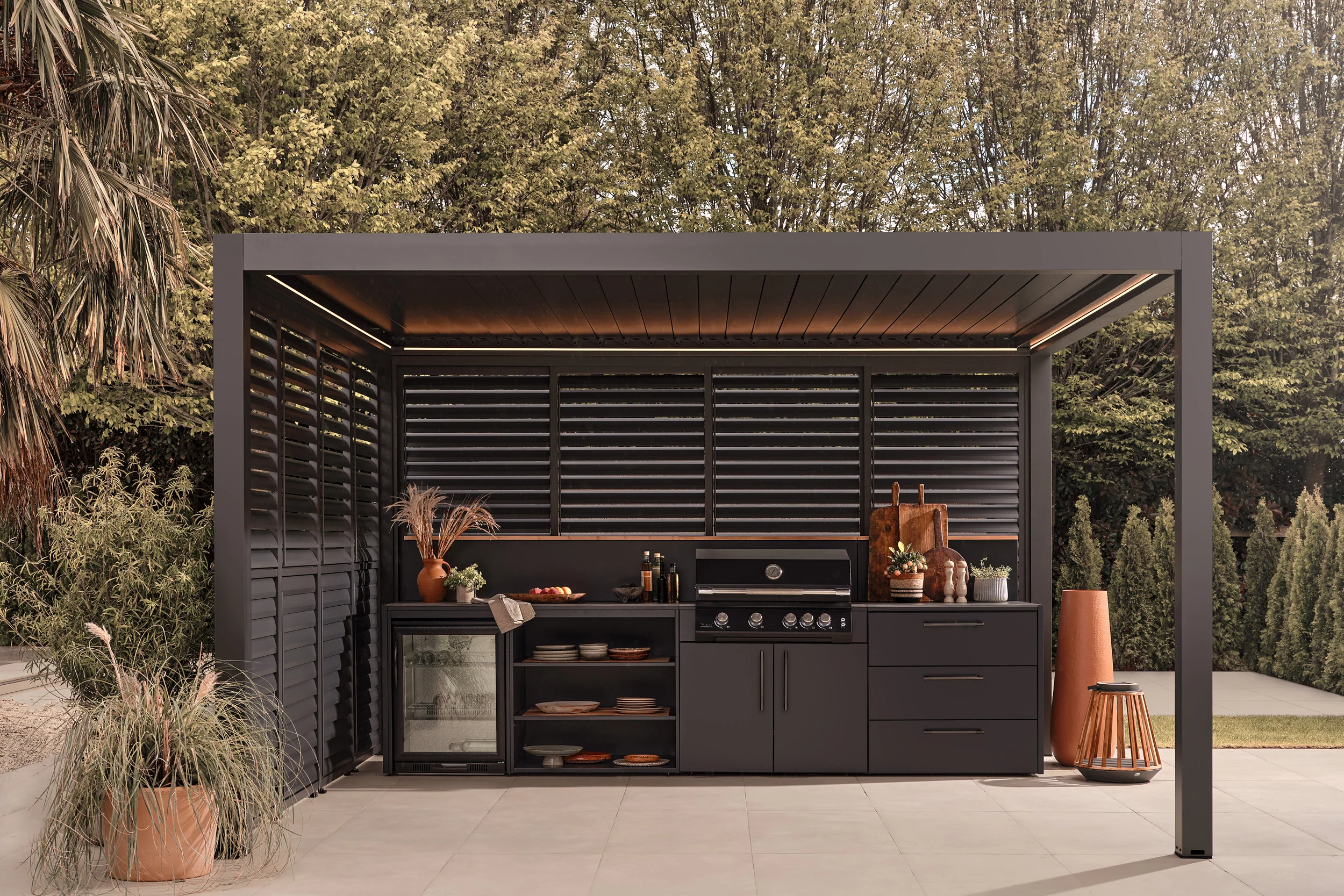
High-Rise Balcony Weight Limits
A site required an exterior setup on an upper-level balcony. The structural engineer specified a lightweight aluminum-framed modular kit. This choice met all site weight limits while providing professional-grade culinary utility. The second-order effect was a significant increase in the usable square footage of the residence.
Coastal Corrosion Mitigation
A home located within the salt-mist zone required a long-term modular solution. The design replaced all standard hardware with marine-grade 316 stainless steel. This upgrade prevented the oxidation that typically destroys exterior islands in coastal regions. Site chemistry must always inform the material palette.
Arid Climate Heat Management
An installation in a high-heat desert region faced extreme UV radiation and surface temperature spikes. The modular design incorporated high-albedo finishes to reflect solar energy. This strategy kept the cooking surface at a safe operating temperature throughout the afternoon, ensuring the island remained functional even during intense heat.
Planning, Cost, and Resource Dynamics
| Expenditure Phase | Investment Allocation | Primary Driver | Risk Level |
| Utility Foundation | 30–45% | Site Complexity | High |
| Modular Kit Chassis | 25–40% | Material Grade | Moderate |
| High-Output Appliances | 20–35% | Performance Tier | Low |
| Protective Finishes | 10–20% | Aesthetic Standard | Moderate |
Forecasting is often distorted by underestimating the cost of site preparation. Utility trenching and the creation of a level concrete pad are significant, non-negotiable expenses. Capital must be prioritized for these foundational elements before selecting expensive cabinetry. Investing in a robust utility grid allows for future upgrades and system expansion without the need to tear out the existing island.
Tools, Strategies, and Support Systems
Infrared Thermography
This tool is used to scan the island during peak usage. It identifies unintended heat transfer, allowing designers to add cooling vents where necessary.
Digital Load Modeling
Engineers use software to verify the chassis strength. This ensures the structure can support the weight of industrial-grade ovens and fridges.
Moisture-Evacuation Audits
Regular checks ensure that internal drainage channels remain clear of debris. This system prevents water accumulation within the kit’s enclosure.
Atmospheric Sensors
Sensors monitor the humidity level within the island. They trigger automatic ventilation when moisture levels threaten electrical performance.
Passivation Maintenance
Regular treatment of stainless surfaces with specialized chemicals preserves the chromium oxide layer. This protects the finish from environmental decay.
Risk Landscape and Failure Modes
Failures in modular kits typically begin at the joints. Poorly specified gaskets lead to water infiltration, which creates an environment where mold and rust can flourish. Compounding this risk is the tendency to hide electrical junctions behind paneling. A taxonomy of failure must include the warping of frames, the failure of door gaskets, and the oxidation of mounting hardware. A rigid, documented maintenance schedule is required to catch these failures early.
Governance, Maintenance, and Long-Term Adaptation
Maintenance is a cycle of systematic inspection and adjustment. Seasonal audits should focus on the integrity of structural fasteners and the functionality of vent louvers. Any sign of finish deterioration must be addressed immediately with professional-grade cleaning agents. Keeping a log of all modifications and service calls provides the necessary context for long-term stewardship. This data-driven approach ensures the asset remains a high-value component of the property.
Measurement, Tracking, and Evaluation
-
Leading Indicators: The rate at which the island cools after heavy use and the level of internal dryness during wet seasons.
-
Lagging Indicators: The frequency and cost of maintenance interventions related to structural fasteners.
-
Documentation Example: The Modular Performance Record, documenting the installation of all utility connections and service history.
Accurate records enable the owner to predict when components will reach their end-of-life. They allow for the efficient replacement of parts rather than the total failure of the entire system. Systematic documentation is the mark of professional property management.
Common Misconceptions and Oversimplifications
-
Myth: “Modular kits are easy to install.” Correction: The underlying utility work requires professional knowledge of gas and electrical standards.
-
Myth: “Stainless steel is impervious to rust.” Correction: Standard grades will corrode quickly; marine-grade alloys are required for long-term durability.
-
Myth: “Outdoor islands do not require ventilation.” Correction: Trapped heat causes structural warping and electronic failure in all enclosed systems.
-
Myth: “Standard indoor appliances are fine.” Correction: Outdoor units are specifically designed for higher thermal tolerances and environmental moisture.
Ethical, Practical, and Contextual Considerations
Designers carry the responsibility of ensuring the safety of every installation. Specifying kits that lack fire-rated components in a wood-framed project is a serious ethical lapse. Professional practice mandates strict adherence to local building codes regarding fire safety, gas distribution, and electrical grounding. Each modular build must demonstrate clear technical honesty, prioritizing the safety of the user above all other factors. This commitment defines the professional standard in modern exterior design.
Conclusion
The selection of the best prefab outdoor kitchen plans is a process of disciplined engineering analysis. Aesthetic concerns must remain secondary to the structural and mechanical realities of exterior living. By prioritizing durable materials, effective moisture management, and professional-grade utility integration, the designer ensures the project remains a high-value asset. Authority in this field is built through the patient application of technical standards. This results in an exterior space that is both reliable and sophisticated.