Best Outdoor Kitchen For Entertaining: Structural Systems And Layout Guide
The design of a high-performance exterior culinary environment requires an intentional synchronization of landscape architecture, mechanical engineering, and hospitality logistics. Standard domestic building practices frequently treat backyard cooking areas as isolated append-on features. Best Outdoor Kitchen For Entertaining. When a system is designed without analyzing human circulation vectors, structural failure and operational bottlenecks are inevitably introduced. A professional exterior culinary hub operates as a high-intensity hospitality environment that must remain durable under severe atmospheric exposure while facilitating fluid social interactions.
Spatial optimization cannot be achieved through superficial cosmetic choices or high-end appliance selection alone. Standardized exterior structures must provide concrete foundations and durable framing configurations that adapt to localized climate pressures. This structural resilience allows for predictable utility integration, provided that the initial spatial layout is calculated with absolute precision. Homeowners regularly prioritize visual finishes over underlying structural physics, which frequently results in unexpected systemic deterioration.
Achieving complete integration between cooking mechanics and guest engagement requires a sophisticated understanding of spatial zoning. Industrial exterior layout planning relies on distinct operational sectors that organize food prep tasks while maximizing conversational connectivity. This comprehensive guide serves as the definitive reference for analyzing how these advanced hospitality assets are designed, executed, and maintained over time.
Best outdoor kitchen for entertaining
Best outdoor kitchen for entertaining options are routinely mischaracterized by consumers who focus exclusively on the maximum BTU output of a grill. True exterior hospitality architecture represents an engineered balance of thermal control, food safety zones, and proximity to social seating. When these spaces are evaluated correctly, they function as open-air culinary stages where the cooking process becomes an interactive performance rather than an isolated chore.
Oversimplification remains a dangerous risk when non-professional designers choose a generic layout from a luxury catalog without site evaluation. A configuration that functions perfectly in a spacious pavilion will often fail when squeezed onto an exposed residential deck. Severe spatial conflicts are created when smoke paths, prevailing wind vectors, and guest seating clearances are ignored during the early schematic design phase.
Industrial external kitchen planning relies on clear mathematical ratios between preparation surfaces and guest counters. These geometric constraints dictate that the hot zone must be physically isolated from where guests congregate to prevent injury or thermal discomfort. If the logic of these spatial boundaries is violated to accommodate a cosmetic finish, the safety of the entire entertaining space is compromised. True technical mastery requires strict adherence to these zoning principles.
The Problem of Sightline Geometry
When an exterior island is specified without considering sightline geometry, social isolation occurs. The cooking surface should be oriented facing the primary conversational seating area rather than a blank perimeter wall. This positioning permits the host to maintain eye contact with guests while managing high-temperature culinary tasks.
Multi-Chef Workspace Optimization
Large gatherings frequently require multiple individuals to collaborate within the food preparation loop simultaneously. A layout must provide separate circulation lanes for primary cooking, plating, and beverage service to prevent spatial overlap. When bottlenecks are minimized, service velocity is enhanced during peak entertaining hours.
Historical and Systemic Evolution of Social Cooking
The cultural roots of open-air food preparation can be traced back to early communal fire pits that served as the focal points of primitive human settlements. This ancient social dynamic was progressively commercialized during the mid-twentieth century by the introduction of the mass-produced charcoal kettle grill. This post-war shift established a permanent link between suburban leisure, residential backyard spaces, and informal weekend hospitality.
During the late twentieth century, structural permanence became a primary demand among luxury property owners. Early attempts at permanent outdoor cooking islands frequently relied on standard interior plywood framing covered with a thin layer of tile or synthetic stucco. These rudimentary construction methods suffered from massive structural failure in northern regions, where moisture penetration and freeze-thaw cycles shattered grout lines and induced internal framing rot.
In the contemporary architectural landscape, external entertaining spaces have evolved into sophisticated extensions of the main indoor kitchen. Advanced material science now permits the installation of weather-resistant cabinetry, computerized under-counter refrigeration, and integrated entertainment technology. This evolution has transformed the backyard from an occasional weekend grilling station into a highly engineered, permanent multi-zone hospitality hub.
Industrialization of Exterior Millwork
Traditional masonry construction was historically the only viable choice for permanent outdoor islands despite its extreme weight. The introduction of high-density polymers and pre-welded marine-grade aluminum sub-frames revolutionized the industry by providing lightweight modular alternatives. These engineered systems ensure long-term dimensional stability without requiring massive concrete footings.
The Open-Concept Exterior Integration
Modern architectural floor plans emphasize a seamless visual transition between interior living rooms and outdoor patios. Large sliding glass wall systems allow the interior kitchen and the exterior entertaining island to operate as a single continuous space. This physical connection requires the exterior materials to visually complement the interior design language.
Architectural Classifications of Exterior Hospitality Frameworks
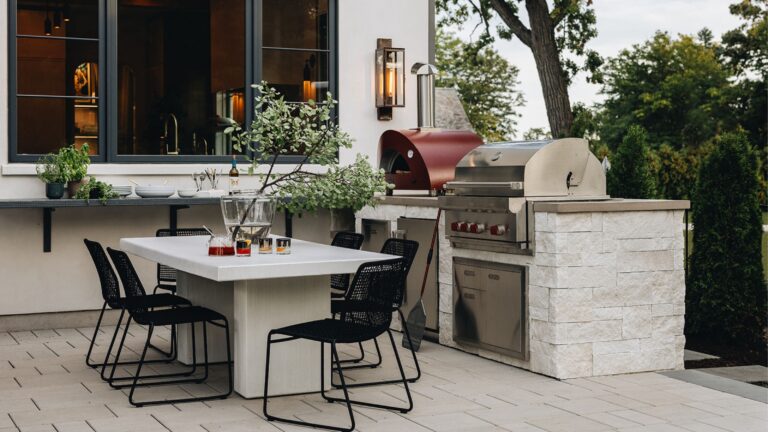
Exterior entertaining configurations are divided into distinct structural shapes, each offering clear trade-offs in terms of spatial density and guest interaction capacity.
Linear Single-Island Frameworks
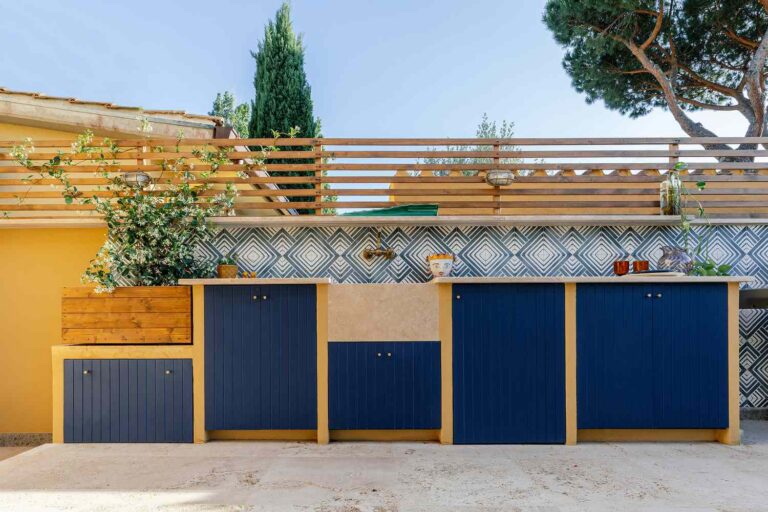
Linear arrangements position all cooking, storage, and preparation elements along a single continuous wall surface. This layout is highly efficient for narrow patios or urban terraces where total floor space is tightly constrained.
L-Shaped Interactive Blueprints
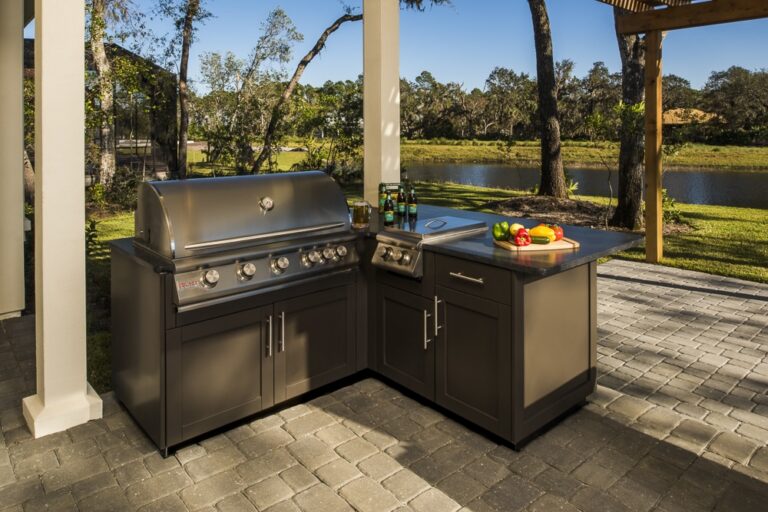
Perpendicular counter lines create a natural boundary that separates the active cooking workspace from guest traffic. The longer leg of the L-shape typically houses the hot and cold culinary zones, while the shorter leg serves as an elevated bar surface for social interaction. This geometry creates an efficient work triangle while keeping guests safe from hot oil splatters.
U-Shaped High-Density Configurations
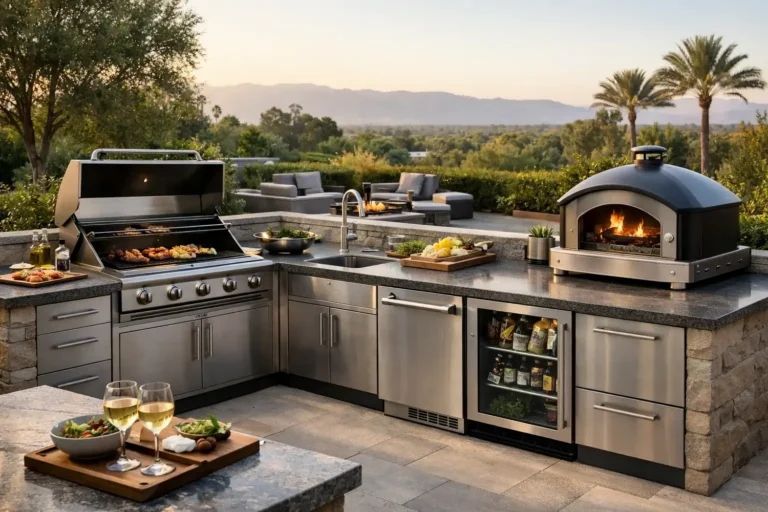
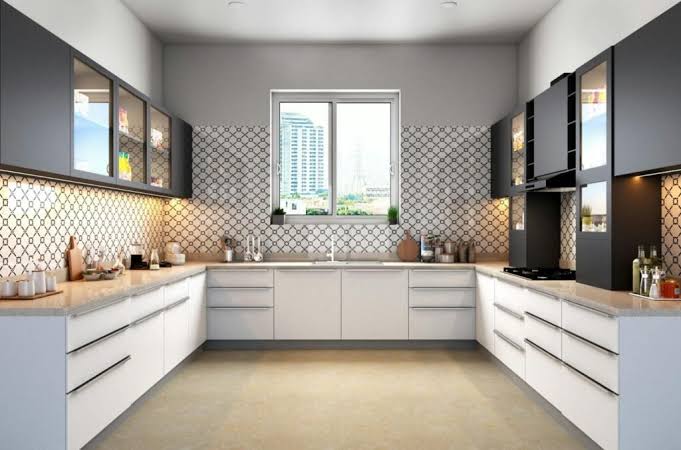
Wrapping counters around three distinct edges creates a highly secure, professional kitchen environment that completely eliminates external traffic intrusion. This configuration offers the maximum amount of continuous countertop space for food preparation, plating, and specialized culinary appliances. It requires a large overall footprint, making it less suitable for smaller residential lots.
Split-Island Independent Sub-Systems
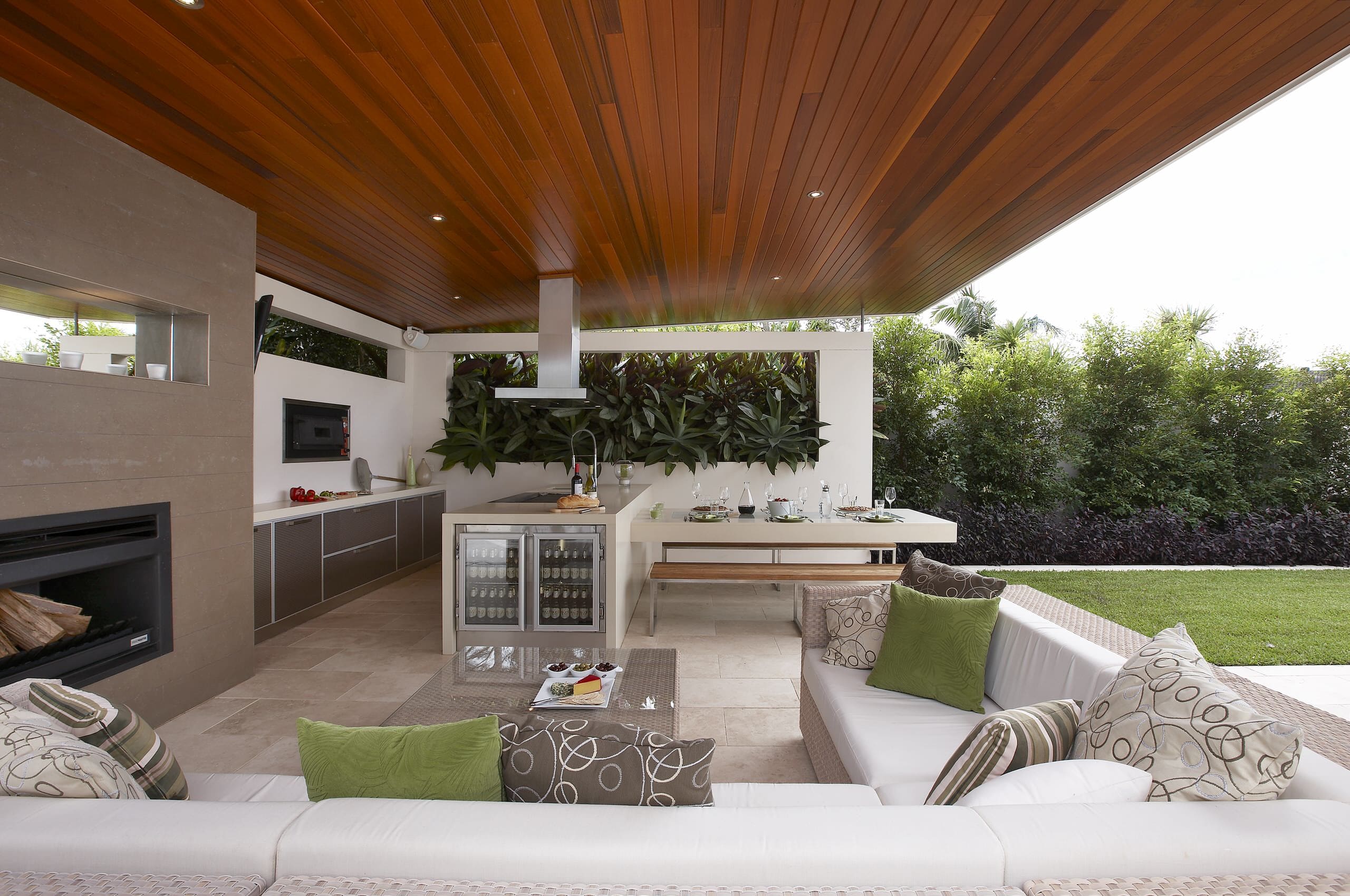
The split-island layout utilizes a dedicated perimeter cooking counter paired with a completely separate, parallel island for guest seating and beverage service. This configuration represents the pinnacle of professional residential design by creating absolute physical separation between utility infrastructure and social entertainment zones. The host can face the guests directly across the open aisle while operating the main cooking appliances.
Key Variations and Structural Trade-Offs
| Layout Typology | Capital Intensity | Guest Seating Capacity | Primary Structural Risk |
| Linear Single-Island | Low | Low | Spatial crowding during plating |
| L-Shaped Blueprint | Medium | Medium | Corner hardware accessibility |
| U-Shaped Configuration | High | High | Trapped heat zones under pavilions |
| Split-Island Sub-System | Very High | Maximum | Under-slab utility alignment |
Material Science and Structural Core Substrates
The underlying core materials select for an exterior island determine its capacity to withstand continuous UV radiation, moisture ingress, and thermal shock over decades of exposure.
High-Density Polyethylene (HDPE)
Marine-grade polymer boards represent a major advancement in weather-resistant cabinetry engineering. This material is completely waterproof, chemically inert, and solid-colored throughout, ensuring that deep scratches will not reveal a contrasting core layer. It is impervious to wood-boring insects, marine rot, and salt-air oxidation, though it requires specific expansion gaps to accommodate thermal movement during intense summer heat.
304 and 316 Stainless Steel
Stainless steel provides excellent structural rigidity and absolute fire resistance, which is essential when housing high-output gas grills. While 304-grade steel is acceptable for inland environments, coastal zones require 316-grade marine steel, which contains molybdenum to prevent pitting corrosion caused by atmospheric salt. Regular application of passivating oils is required to maintain the protective chromium oxide surface layer.
Glass Fiber Reinforced Concrete (GFRC)
Pre-cast GFRC panels offer the architectural appearance of massive stone masonry without the extreme weight penalty. The integration of high-tensile glass fibers into the concrete matrix allows for thinner structural walls that resist cracking during extreme winter freeze-thaw cycles. These panels must be sealed with a high-performance fluoropolymer coating to prevent oil and grease penetration.
Natural Quartzite and Engineered Countertops
Countertop selection must prioritize UV stability and low porosity to survive exterior exposure. Natural quartzite represents an exceptional choice due to its extreme hardness and complete resistance to solar yellowing.
Kinetic Hardware and Appliance Integration Mechanics
The operational lifespan of an exterior kitchen is ultimately dictated by the performance of its mechanical hinges, drawer slides, and appliance seals under harsh environmental conditions.
Concealed hinges must be constructed entirely from marine-grade stainless steel to prevent internal spring corrosion. Standard interior hardware utilizes chrome-plated carbon steel components that rust rapidly when exposed to ambient morning dew. Exterior drawer slides should feature unexposed undermount geometry, protecting the lubricated ball bearings from airborne dust, pollen, and abrasive grit.
Appliance integration requires careful calculation of ventilation clearances and electrical insulation factors. Exterior-rated refrigeration units must utilize powerful forced-air cooling systems capable of maintaining safe food temperatures even when ambient air temperatures exceed 100 degrees Fahrenheit. These units require heavy-duty door gaskets and magnetic seals to exclude moisture and prevent thermal energy loss.
Outdoor cooking elements must be securely isolated from flammable structural components through the installation of insulated finishing jackets. These double-walled stainless steel liners prevent the intense thermal energy generated by a 60,000 BTU gas grill from transferring into surrounding cabinetry walls. Failure to integrate an engineered insulation jacket can result in the ignition of adjacent framing members or the melting of polymer cabinetry cores.
Real-World Deployment Scenarios and Environmental Pressures Best Outdoor Kitchen For Entertaining
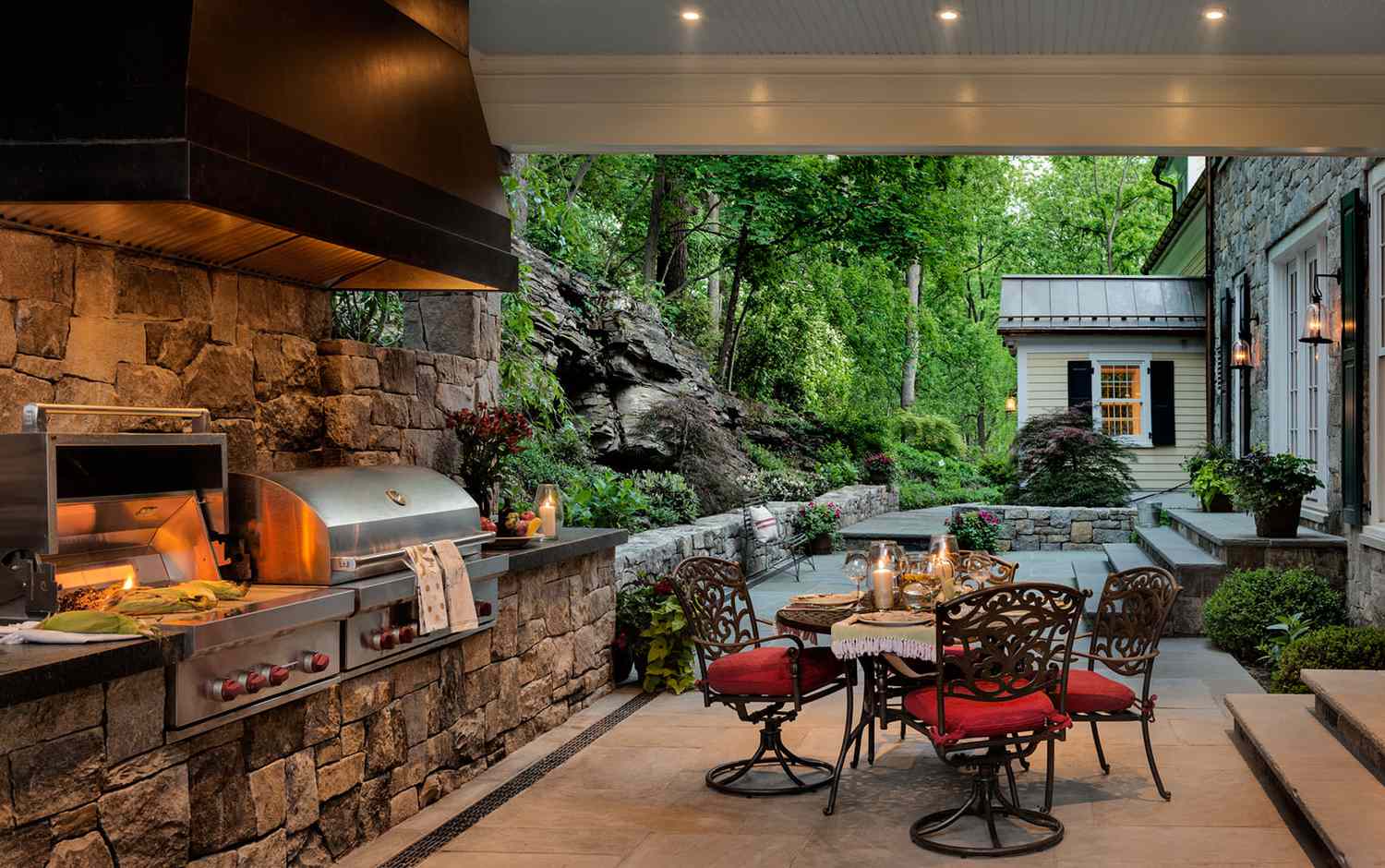
Selecting and executing an exterior hospitality space requires adapting the mechanical design to localized climate constraints and architectural limits.
The Exposed Coastal Poolside Deck
A residential property located along the Florida coastline faces continuous exposure to salt spray, intense UV rays, and tropical storm winds. An L-shaped configuration constructed from 316 marine-grade stainless steel framing wrapped in natural stone cladding represents the most durable design response. The primary operational hazard is galvanic corrosion, which occurs when dissimilar metals contact each other in a humid, salty environment. This risk is countered by utilizing non-conductive polymer isolation washers at all fastening points.
The Northern Freeze-Thaw Patio
A suburban backyard in Chicago experience extreme temperature shifts ranging from sub-zero winter freezes to humid summer heat waves. A split-island configuration using pre-cast GFRC structural panels and natural quartzite countertops provides the necessary durability against thermal expansion. The critical failure mode in this environment is water lines freezing within the island frame.
The Urban High-Rise Rooftop
An entertaining space constructed on a downtown Manhattan rooftop terrace is governed by strict structural weight limits and severe wind uplift hazards. A linear single-island setup engineered from lightweight aircraft-grade aluminum modules represents the ideal structural choice. The main design constraint is wind load, requiring the island frame to be anchored directly into the building’s structural concrete slab using heavy-duty chemical anchors. Second-order effects include managing smoke dispersal, which requires high-velocity directional wind deflectors to protect neighboring properties.
The Arid Desert Oasis
A luxury property located in Scottsdale, Arizona, faces sustained summer heat, zero humidity, and intense airborne dust storms. A U-shaped configuration built from thick concrete block masonry finished with reflective light-colored stucco minimizes solar heat gain. Refrigeration systems must be shaded from direct sunlight using an overhead steel pergola to prevent the compressors from overheating. Drawer boxes must be fitted with specialized compression gaskets to seal out fine desert dust during seasonal sandstorms.
Infrastructure Requirements and Utility System Design
Before any visible cabinetry panels are anchored to a patio surface, the underlying mechanical, electrical, and plumbing (MEP) infrastructure must be engineered with absolute precision.
Gas distribution networks must be calculated to deliver adequate static pressure when multiple cooking appliances are firing simultaneously. Natural gas lines routed from the main home require large pipe diameters to compensate for pressure drops over long distances. Main shut-off valves must remain accessible via un-lockable access hatches inside the cabinetry carcass, ensuring rapid isolation during an unexpected thermal event.
Electrical systems must deliver clean, stable power to support computerized refrigeration units, rotisserie motors, and integrated low-voltage LED landscape lighting. All exterior branch circuits must be protected by highly sensitive Ground Fault Circuit Interrupter (GFCI) breakers installed within the main indoor electrical panel. Outdoor outlets must be housed inside weatherproof, heavy-duty enclosures that remain fully sealed even when appliance power cords are plugged in.
Plumbing infrastructure requires an intentional strategy for waste-water management and backflow prevention. Exterior sinks must be connected to the main municipal sewer line using gravity-fed drainpipes that maintain a minimum downward slope of one-quarter inch per linear foot.
Financial Engineering and Long-Term Capital Dynamics
The deployment of a premium exterior culinary asset requires a sophisticated capital allocation strategy that balances upfront infrastructure expenses against long-term maintenance costs.
Capital Allocation Vectoring
| Infrastructure Component | Total Capital Allocation | Primary Cost Variable |
| Sub-Frame & Core Structural Panels | 25% – 35% | Material grade (316 Stainless vs. HDPE) |
| MEP Utility Trenching & Permitting | 20% – 30% | Linear distance from primary residential utility stacks |
| Commercial Cooking & Prep Appliances | 20% – 25% | Marine-grade certifications, BTU capacity ratings |
| Countertop Material & Fabrication | 15% – 20% | Slab thickness, natural quartzite vs. concrete |
| Low-Voltage Lighting & Tech Integration | 5% – 10% | Weatherproof automation control systems |
The Hidden Infrastructure Premium
Homeowners regularly underestimate the capital required to extend core utilities through existing concrete hardscaping. Trenching through reinforced stone patios can easily surpass the retail purchase cost of the primary cooking appliances. Skimping on utility depth or pipe diameters to minimize upfront labor costs invariably results in low gas pressure and plumbing blockages.
Valuation and Opportunity Cost Dynamics
A professionally engineered exterior kitchen constructed from premium materials acts as a permanent improvement that enhances real estate valuation. Cheap, semi-permanent modular setups constructed from basic materials degrade quickly and are viewed as a liability by property appraisers. Investing in marine-grade components preserves the initial capital expenditure by eliminating the need for total structural replacement after five to seven years of environmental exposure.
Risk Assessment and Taxonomy of Systemic Failure Modes
The degradation of an exterior cooking environment is rarely driven by a single event. It is almost always caused by compounding environmental factors and deferred maintenance schedules.
The Capillary Moisture Intrusion Cascade
Moisture accumulation within unvented island enclosures is the most destructive hidden risk profile facing exterior structures. When stone veneer panels are attached to a sub-frame without a drainage cavity, water penetrates microscopic fissures in the grout lines during driving rainstorms.
Gas Pooling and Explosive Hazards
Liquid propane gas is significantly heavier than ambient air, causing it to sink and pool in the lowest zones of an enclosed structure if a leak occurs. If a masonry island is constructed without low-level ventilation louvers, escaped propane gas will accumulate silently inside the cabinet bases. When the operator depresses the electronic grill igniter button, this trapped gas cloud can detonate violently, destroying the structure and causing catastrophic injury.
Countertop Thermal Fracturing Mechanisms
Natural stone slabs possess high thermal mass but low elastic deflection capacity. When a high-output built-in grill is operated continuously for hours, intense heat radiates into the adjacent countertop edges. If the installer failed to provide a thermal expansion joint composed of high-heat silicone between the metal grill frame and the stone cutout, the expanding metal will exert immense mechanical pressure against the stone, causing the slab to fracture along its weakest crystalline vein lines.
Governance Protocols, Maintenance, and Asset Preservation
Sustaining the operational safety and aesthetic appearance of an exterior culinary asset requires a disciplined, programmatic approach to maintenance. This preventive maintenance cycle must be executed semi-annually.
Semi-Annual Technical Verification Matrix
A rigorous maintenance protocol should be executed every spring and autumn to protect the mechanical, electrical, and structural systems from deterioration.
-
Gas Train Pressure Testing: Apply a specialized surfactant solution to all manual gas valves and flexible couplings while the system is pressurized to check for expanding micro-bubbles indicating a gas leak.
-
Kinetic Mechanism Cleansing: Purge all airborne grit and dust from drawer slide channels using low-pressure compressed air, and apply a thin layer of dry-film fluoropolymer lubricant to the mechanical bearings.
-
Sealer Barrier Application: Thoroughly clean all natural stone surfaces using a pH-neutral detergent, allow to dry completely for twenty-four hours, and apply a fresh coat of solvent-based fluoropolymer stone sealer.
-
Electrical Enclosure Inspection: De-energize the main circuit breaker, open all exterior outlet boxes, and inspect the internal wiring connections for evidence of moisture ingress, insect nesting, or insulation dry-rot.
Surface Material Chemical Stewardship
Stainless steel surfaces must be protected from aggressive chemical exposure to prevent the breakdown of the invisible passivation layer. Standard household cleaning products containing chlorine, bleach, or hydrochloric acid will cause immediate chemical staining and accelerate pitting corrosion. Maintenance teams must utilize specialized stainless steel cleaners paired with non-abrasive microfiber cloths, wiping exclusively in the direction of the grain to prevent superficial scratching.
Quantitative Performance Metrics and Calibration Records
Evaluating the true structural and mechanical health of an exterior kitchen relies on tracking both immediate physical indicators and long-term structural changes.
Diagnostic Matrix Calibration Parameters
-
Leading Operational Indicators: Monthly checks of refrigeration compressor cycle times during high ambient heat and monitoring structural silicone adhesion along high-stress countertop seams.
-
Lagging Quality Indicators: Annual measurements of structural deflection across countertop planes using a high-precision digital level to detect foundation settling or framing distortion.
Diagnostic Log Ledger Examples
When performing routine maintenance or technical calibrations, entries must be documented with absolute precision to trace long-term environmental patterns:
Maintenance Log Entry 01: May 14, 2026
Component Identification: West Island Base Structure Section 03
Diagnostic Observation: A 1.2mm leveling deviation was detected across the quartzite countertop seam due to minor winter frost heave under the patio slab. Adjustable polymer leveling feet recalibrated to restore zero-plane alignment.
Maintenance Log Entry 02: June 08, 2026
Component Identification: Marine-Grade Refrigerator Condenser Fan Assembly
Diagnostic Observation: Ambient operating temperature reached 102 degrees Fahrenheit; compressor duty cycle increased by 18%. Accumulations of cottonwood pollen and organic debris cleared from the intake vents to restore heat rejection efficiency.
Demolishing Common Industry Misconceptions
A pervasive myth in the residential landscaping sector is that any product marketed under the generic term “stainless steel” is completely immune to rust and degradation. Consumers routinely purchase inexpensive 430-grade steel components from mass-market retailers, only to observe orange iron oxide staining within a single season of rain exposure. Long-term exterior survival requires a minimum specification of 304-grade steel for inland zones, while coastal applications require 316-grade marine steel.
Another common misconception is that outdoor cooking areas do not require mechanical ventilation if they are positioned beneath a tall patio roof or wooden pergola. This misunderstanding frequently results in smoke and vapor damage to expensive ceiling structures. A commercial-grade exterior hood featuring a minimum extraction velocity of 1200 CFM is mandatory for all covered configurations.
Furthermore, many designers believe that natural granite is completely indestructible when exposed to external weather conditions. While granite excels at resisting mechanical scratching, varieties that feature dark coloration absorb immense amounts of solar energy under direct sunlight, causing surface temperatures to rise high enough to cause skin burns upon contact. Selecting light-colored quartzite or applying permanent structural shading systems represents a mandatory requirement for comfortable summer hosting.
Regulatory, Ethical, and Sustainable Sourcing Matrices
Sourcing construction materials for a large-scale exterior project requires evaluating long-term environmental impacts and regional building code mandates. Low-grade polymers and cheap composite panels often contain volatile organic compounds and chemical stabilizers that leach into surrounding soil systems when exposed to continuous rain. Responsible architectural specifications require materials certified by international safety bodies to guarantee environmental neutrality.
Deforestation pressures must be actively countered by choosing high-density polyethylene structures that utilize recycled marine plastics, or by selecting stone materials harvested from certified sustainable quarries. Balancing luxury hospitality with sustainable execution is a core indicator of true design mastery.
Conclusion
Building a high-performance external culinary environment requires moving past basic cosmetic trends and focusing on material compatibility and spatial engineering. The long-term value of an entertainment-focused outdoor kitchen is fundamentally tied to how effectively it manages the challenges of water, heat, and human traffic flow. By anchoring the design process in robust structural frameworks, using premium substrates suited to the local climate, and maintaining a regular upkeep schedule, homeowners can create an enduring hospitality space that performs exceptionally for decades.