Best Built In Grill Options: Comprehensive Performance Analysis
The integration of high-performance cooking apparatus into the built environment represents a sophisticated architectural challenge. A grill is not merely a tool for thermal processing. When specified as a permanent fixture, it becomes an integral component of the building envelope. Best Built In Grill Options. Such systems are subject to unique structural, safety, and operational requirements. Achieving excellence in this domain requires a shift from viewing the appliance as a standalone unit to understanding it as part of a larger, systemic culinary ecosystem that must function reliably across varying climatic conditions.
True technical mastery begins with the acknowledgment that exterior kitchens are high-stakes environments. Thermal management, moisture resistance, and fuel-line distribution must be meticulously engineered. The consequences of failure extend far beyond simple inconvenience to potential fire hazards and structural degradation. Professionals must navigate a landscape of proprietary technologies and regulatory standards. Ensuring that the selected cooking system aligns with both long-term project goals and the immutable laws of building physics remains paramount.
This analysis serves as an authoritative reference for architects, designers, and discerning homeowners tasked with specifying permanent cooking solutions. By stripping away marketing hyperbole and focusing on material science, thermal dynamics, and systemic integration, we provide the groundwork for creating resilient exterior spaces. We move beyond basic feature lists to explore the underlying mechanical realities that distinguish an ephemeral installation from a truly durable, high-performance asset.
Understanding “best built in grill options”
When industry professionals analyze the best built in grill options, they conduct a comparative study of thermodynamic efficiency, material longevity, and installation precision. A persistent misunderstanding in the market is the belief that high price points automatically correlate with architectural suitability. In reality, the ideal grill is defined by its ability to integrate into a specific structural frame while maintaining safety clearances, heat distribution, and gas-flow integrity. Oversimplification—such as neglecting to calculate the required BTU load against gas-line diameters or failing to specify appropriate non-combustible insulation liners—frequently leads to operational failure or safety incidents.
The risks inherent in a superficial selection process are profound. An appliance chosen solely for its aesthetic finish or brand recognition, without accounting for the specific corrosive environment of a coastal site or the heavy wind-loading of a high-altitude project, will inevitably experience accelerated fatigue. The most robust installations are built on the premise that the appliance and the cabinetry form a unified, thermally managed system. By failing to account for the necessary “breathing” space required for venting, designers often trap heat. This error compromises the integrity of the cabinet and can lead to the warping of surrounding structural elements.
Furthermore, the discourse surrounding the best built in grill options must be grounded in the context of the project’s specific culinary program. A system designed for high-volume, professional-grade searing, which requires intensive heat management and complex ignition safety protocols, is entirely distinct from a grill designed for moderate, occasional use. True mastery of the field requires the practitioner to reconcile these programmatic goals with the physical limitations of the site. Ensuring that the infrastructure—gas, electrical, and structural—is sufficient to support the chosen hardware over the long term remains essential.
Deep Contextual Background
The evolution of permanent cooking hardware in the American landscape reflects a shift from utilitarian fire-pits to highly sophisticated, gas-fired culinary workstations. Early models lacked the thermal mass and safety features common in contemporary units. Those versions relied on basic steel fabrication that degraded quickly in outdoor environments. As interior culinary technology advanced, the market demanded equivalent performance for the exterior. This pressure catalyzed a revolution in heat-transfer materials, electronic ignition reliability, and modular integration systems.
We are presently in an era characterized by material science maturation. The move toward 316-grade stainless steel, high-performance ceramics, and digitally controlled combustion cycles has moved the needle on what is possible. The modern built-in grill is an extension of the building envelope. It requires compliance with stringent fire safety codes and, increasingly, integration into the “smart home” energy management grid. This evolution reflects the increasing integration of indoor and outdoor residential environments. The exterior kitchen now serves as a permanent, high-value asset rather than a temporary convenience.
Conceptual Frameworks for Grill Integration
Thermodynamic Envelope Framework
This mental model posits that the grill is a localized high-heat source within a larger structure. The design must accommodate expansion, contraction, and heat dissipation through physical air gaps and specialized insulation liners. Preventing the “soaking” of adjacent combustible cabinetry remains the primary goal of this model. Careful planning mitigates the risk of catastrophic material failure.
Maintenance-Accessibility Index
A grill is a mechanical device, not a sculpture. This framework requires that every installation provides immediate, non-destructive access to internal components—gas valves, regulators, and igniters—for routine service. Ensuring that the built-in nature of the grill does not impede necessary repairs is critical. Designers should prioritize systems that allow technicians to reach vital mechanisms without disassembling the entire stone or masonry enclosure.
Environmental Load Taxonomy
This framework categorizes the project site by its stressors—salt spray, high wind, severe freeze-thaw cycles, or intense UV exposure. Material and appliance selection must be indexed to these specific stressors. Prioritizing 316-grade alloys in coastal zones and high-thermal-mass components in fluctuating climates remains best practice. Adapting the hardware to the local climate extends the functional life of the equipment.
Key Categories and Variations
| Grill Category | Core Material | Thermal Control | Primary Application |
| High-Mass Ceramic | Thermal Ceramic | Exceptional | Precision Smoking/Grilling |
| Professional Gas | 304/316 Stainless | Superior | High-Volume Searing |
| Infrared-Hybrid | Alloy/Ceramic | Direct Heat | Rapid Searing/Multi-Tasking |
| Multi-Fuel | Steel/Cast Iron | Variable | Versatile Culinary Program |
The decision-making logic should follow the project’s primary culinary goal rather than the appliance’s feature list. For users prioritizing low-and-slow techniques, thermal mass and insulation are the primary drivers. For those prioritizing high-speed, high-heat searing, the recovery time and BTU-per-square-inch output of the burner assembly become critical specifications. Weighing these trade-offs ensures the chosen unit aligns with the intended use pattern of the owner.
Detailed Real-World Scenarios Best Built In Grill Options
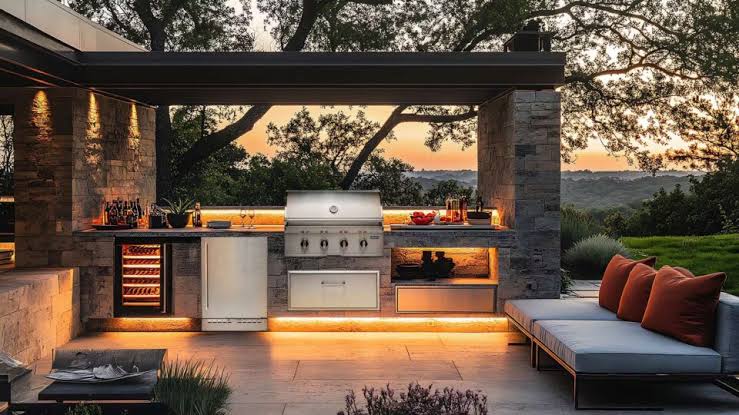
Coastal High-Salinity Installation
In saltwater environments, the primary failure mode is galvanic corrosion. Even stainless steel can succumb to “tea staining” if not maintained. The decision point here is to prioritize 316-grade stainless steel components, including the frame and internal fasteners. Integrating a frequent freshwater-rinsing protocol into the facility’s management plan prevents salt accumulation. Sustaining the pristine surface condition requires regular intervention from the property owner.
Historic Retrofit Project
Integrating a modern, high-BTU appliance into an historic structure requires careful handling of masonry. The failure mode is the thermal cracking of older stone or brick due to direct heat transfer. The resolution is the mandatory installation of an insulated, non-combustible stainless steel jacket. This creates a physical gap that prevents the grill’s heat from ever touching the historic structure. Preserving the integrity of the original building necessitates this protective barrier.
Multi-Use Urban Rooftop
Wind loading on high-rise structures can blow out pilots and disrupt thermal distribution. The failure mode is erratic cooking temperatures. The solution involves specifying a grill with a high-wind-rated, fully enclosed combustion box. An electronic ignition system that automatically detects and re-lights the burner if the flame is extinguished by wind gusting provides additional stability. Reliability is achieved through intelligent engineering designed for adverse weather patterns.
Planning, Cost, and Resource Dynamics
| Phase | Investment | Primary Variable | Risk Level |
| Pre-Design/Engineering | Moderate | Site Utility Capacity | Low |
| Equipment Procurement | High | Alloy/Build Quality | Moderate |
| Construction/Integration | High | Trade Labor Coordination | High |
The cost of a built-in unit is never just the retail price of the machine. The secondary costs—the fabrication of the non-combustible enclosure, the professional installation of gas and electrical lines, and the structural verification—often equal or exceed the equipment cost itself. A budget that ignores these hidden variables frequently runs short before the project is completed. Accurate financial forecasting must include these essential infrastructure requirements.
Risk Landscape and Failure Modes
The failure of a permanent installation usually originates at the interface between the appliance and the surrounding structure. Compounding risks include improper venting, which leads to heat buildup within the island. This causes cabinet deformation and potentially triggers gas valve failure. A robust taxonomy of risk must also categorize the failure of utility connections—gas leaks, electrical shorts in the ignition module, or improper drainage from rain-exposed enclosures. These are the most common causes of system downtime. Monitoring these vulnerabilities prevents minor issues from escalating into expensive repairs.
Governance, Maintenance, and Long-Term Adaptation
A permanent installation is a living asset that requires a structured governance cycle. Biannual thermal inspections verify the integrity of heat shields and burner manifolds to detect early-stage material fatigue. Ignition diagnostics test the redundant systems, as these are the most sensitive electronic components in an exterior environment. For stainless installations, the periodic application of passivation treatments restores the chromium-oxide layer. These protective measures are especially critical in corrosive environments. Establishing a formal maintenance routine ensures that the hardware remains in top condition for the duration of its lifespan.
Measurement, Tracking, and Evaluation
-
Leading Indicators: The success of the initial stress test after installation, checking for even heat distribution and stable ignition under simulated wind conditions.
-
Lagging Indicators: The annual cost of replacement parts and technical service calls normalized against the frequency of use.
-
Documentation: Maintenance logs detailing the specific cleaning agents used, the date of last burner-manifold calibration, and the replacement history of electronic control modules.
Keeping accurate records provides clarity on the ongoing health of the appliance. Such data proves invaluable when troubleshooting performance problems later.
Common Misconceptions
-
Myth: “All built-in grills are effectively the same.” Correction: Thermal mass, gas-flow dynamics, and materials vary so greatly that they define entirely different culinary capabilities.
-
Myth: “The higher the BTU rating, the better the grill.” Correction: BTU must be balanced against thermal mass; excessive BTUs without adequate heat-sink capability lead to flare-ups and uneven cooking.
-
Myth: “Stainless steel is immune to rust.” Correction: Stainless steel is “stain-less,” not “stain-proof”; it requires specific maintenance in exterior environments.
Ethical, Practical, and Contextual Considerations
The selection of a built-in grill is an architectural decision with significant implications for safety and long-term facility management. It requires the professional to look beyond immediate culinary gratification and toward the building’s lifecycle. Ethical practice demands that the designer prioritizes safety, durability, and reparability. Ensuring that the installation does not become an abandoned or hazardous feature due to poor material specification remains a priority. Professional duty includes crafting a solution that serves the owner reliably while adhering to rigorous safety standards.
Conclusion
The pursuit of the best built in grill options is a rigorous engineering exercise that demands a departure from the superficial nature of consumer marketing. By prioritizing thermal performance, material resilience, and systemic integration, the professional can transform a functional appliance into a durable, high-performance architectural feature. Success in this field is measured not by the complexity of the hardware, but by the quiet, consistent performance of the system over years of intensive use. True authority in this domain is earned through the patient application of building science. This ensures that the permanent culinary workspace remains a reliable, safe, and sophisticated bridge between the home and the environment it occupies.