Best Outdoor Kitchen For Small Spaces: Expert Design Guide
The design of a functional culinary environment within a restricted footprint represents a complex exercise in spatial efficiency and mechanical integration. Homeowners often face the challenge of reconciling aspirations for high-performance equipment with the reality of limited square footage. Best Outdoor Kitchen For Small Spaces. Successful projects are characterized not by the quantity of appliances, but by the thoughtful optimization of the work triangle and the strategic selection of multi-functional hardware.
Professional results in compact environments are only achieved through rigorous planning that anticipates the interaction between heat sources, storage requirements, and utility infrastructure. Space constraints necessitate a departure from conventional, sprawling configurations, requiring instead a focus on vertical utility and modular versatility. By treating the project as a cohesive architectural system, the designer ensures that the limited space is leveraged to its maximum potential.
This analysis explores the systemic requirements for high-performance exterior builds where space is at a premium. It focuses on the intersection of building science, ergonomic design, and material resilience, providing a reference for those seeking to maximize utility without compromising safety or functionality. The following sections establish the parameters required for creating an enduring, high-value asset within a confined landscape.
Understanding “best outdoor kitchen for small spaces”
When experts analyze the best outdoor kitchen for small spaces, they prioritize the mechanical output-to-footprint ratio. A widespread error involves the saturation of a small area with oversized appliances, which eliminates necessary prep surface and inhibits movement. A truly professional design focuses on the consolidation of functions. By utilizing high-efficiency, multi-purpose units, designers achieve commercial-level performance without the footprint of a traditional kitchen.
The Oversimplification Risk
Many compact projects fail because they overlook the necessity of clearances. Heat-producing hardware requires specific distances from combustibles and structural boundaries. Failure to maintain these gaps leads to safety hazards and long-term damage to the surrounding structure. Designers must perform a thorough spatial audit before finalizing appliance selections. Precision in the early planning stages prevents systemic failures during the installation process.
Optimizing the Culinary Work Triangle
In compact builds, the work triangle must be condensed without causing operational friction. The proximity of the heat source to the preparation surface is critical for maintaining an efficient workflow. Vertical storage solutions, such as wall-mounted prep surfaces or suspended tool racks, allow for the preservation of primary workspace. Balancing storage needs with the available horizontal surface area remains the most significant challenge in small-scale design.
Deep Contextual Background of Compact Exterior Builds
The evolution of compact exterior kitchens reflects a broader shift toward refined residential living. Historically, limited space implied a reduction in functionality, but modern engineering has decoupled performance from footprint. Advancements in burner technology and high-density material science allow for the creation of compact, permanent systems that perform at the same level as industrial setups.
Material Science and Component Miniaturization
The movement toward high-performance compact environments was enabled by the development of resilient, space-efficient hardware. Compact refrigeration units and high-output burners now occupy significantly less volume than their predecessors. This miniaturization allows for greater flexibility in layout design. Designers can now prioritize high-density configurations that utilize every available square inch effectively.
Evolving Residential Demands
Current property owners demand professional functionality even in smaller urban settings. This expectation has forced manufacturers to prioritize modularity in their product lines. Compact systems now offer the same degree of utility as larger installations. The shift toward permanent, hard-plumbed exterior spaces reflects the increasing importance of the outdoor area as a vital residential component.
Conceptual Frameworks and Mental Models
The Kinetic Volume Model
This framework views the workspace as a dynamic volume rather than a static footprint. By integrating collapsible prep surfaces, the workspace footprint expands only when needed. The model optimizes floor space while maintaining total functionality.
The Thermal Load Concentration Framework
In restricted areas, heat density is the primary danger. This model dictates the use of forced-air ventilation to quickly disperse radiant energy. It ensures that the surrounding structure is not overwhelmed by the heat generated by compact, high-output appliances.
The Utility Grid Optimization Model
Compact builds require careful routing of gas, water, and power. This framework prioritizes the creation of a centralized utility node. By consolidating all connections into a single point, designers reduce the complexity of the trenching process and minimize infrastructure clutter.
Key Categories and Variations of Construction
| Construction Category | Design Priority | Space Efficiency | Structural Complexity |
| Modular Stainless | Rapid Deployment | High | Low |
| Linear Masonry | Vertical Storage | Moderate | Moderate |
| Retractable Units | Footprint Flexibility | Very High | High |
| Integrated Corner Nodes | Spatial Optimization | High | Moderate |
Decision logic should focus on the site’s constraints and usage frequency. For high-frequency culinary use, a linear stainless system provides the most durability. For occasional use in tight corners, a retractable or modular unit offers the best balance of utility and space preservation.
Detailed Real-World Scenarios Best Outdoor Kitchen For Small Spaces
Urban Balcony Constraint
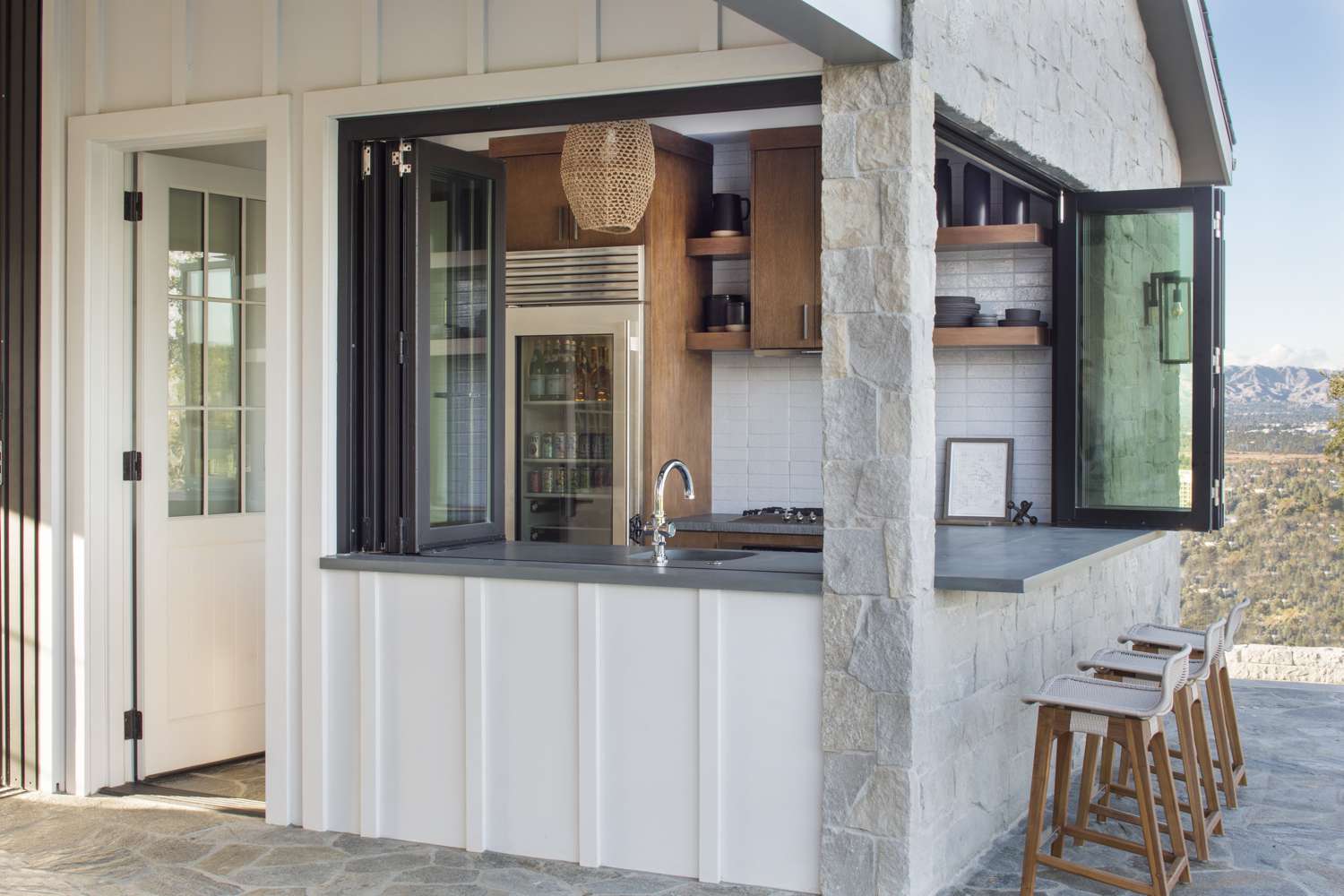
A high-rise terrace was limited by strict fire codes and structural weight limits. The project utilized a lightweight, high-performance electric grill and a modular storage unit. This solution met the spatial constraints while maintaining high culinary utility. The second-order effect was the successful integration of a professional kitchen into a previously underutilized area.
Narrow Side-Yard Integration
The available footprint was extremely narrow. The design utilized a vertical wall-mounted prep station and an in-ground gas supply line. The failure to use wall space would have resulted in an unusable workspace. This scenario highlights the necessity of utilizing vertical dimensions in compact site planning.
Compact Corner Optimization
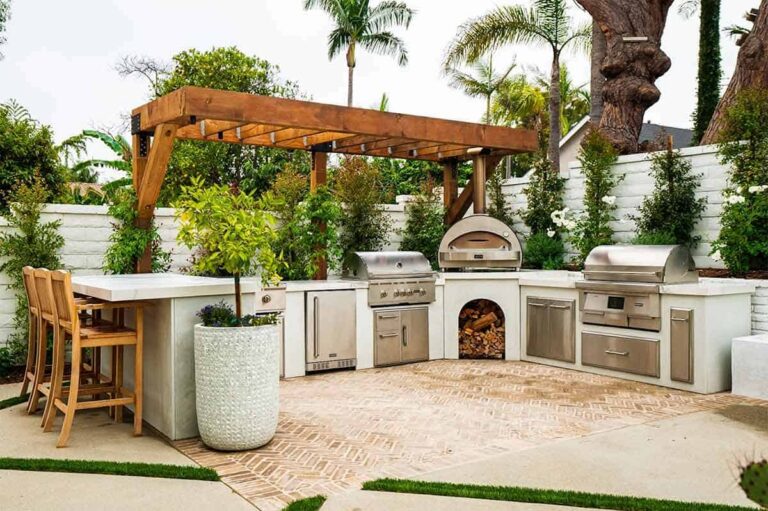
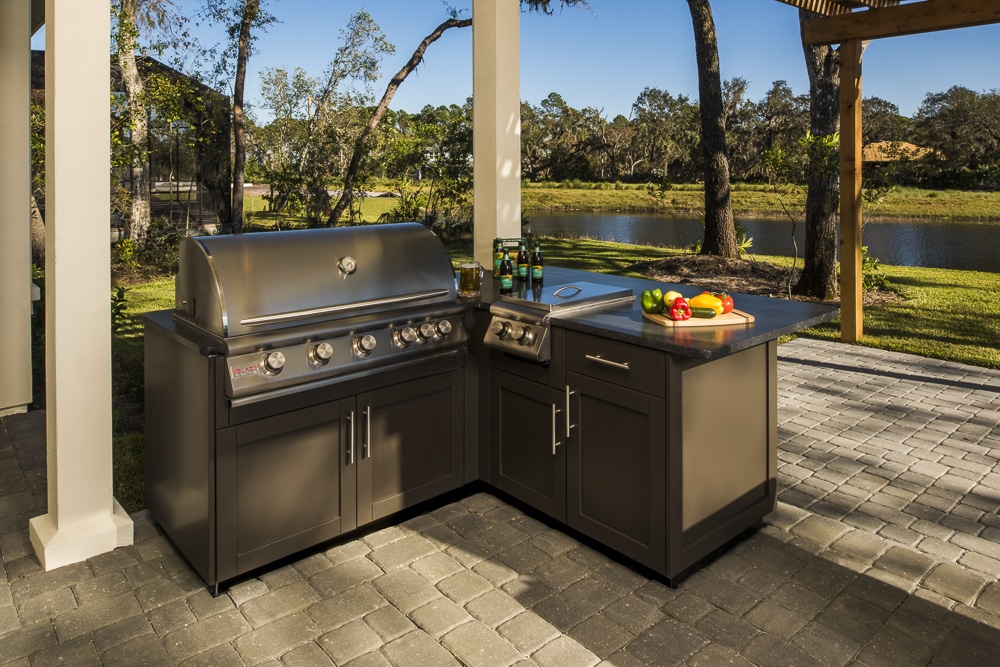
A tight corner forced the use of a modular, L-shaped configuration. The design placed the burner in the center of the arc, minimizing movement for the user. This strategy illustrates the principle of maximizing workflow efficiency within a restricted geometry.
Planning, Cost, and Resource Dynamics
| Expenditure Phase | Allocation Range | Primary Variable | Risk Factor |
| Site Infrastructure | 25–45% | Utility Trenching | Significant |
| Structural Build | 20–35% | Custom Fabrication | Moderate |
| High-Efficiency Appliances | 20–40% | Brand Performance | Low |
| Protective Finishes | 10–20% | Environmental Rating | Low |
Forecasting is frequently impacted by the cost of specialized compact hardware. High-efficiency units often command a premium price. Budgeting for professional-grade utilities is essential for success. Capital should be prioritized for structural integrity and utility reliability, rather than purely aesthetic surface materials.
Tools, Strategies, and Support Systems
Computational Fluid Dynamics
This digital tool simulates heat distribution, ensuring that compact layouts are safely ventilated.
Modular Foundation Systems
These pre-engineered bases ensure that compact islands remain stable without requiring large, permanent footings.
Smart Utility Manifolds
These central nodes combine gas and electrical connections, simplifying the installation within restricted footprints.
Advanced Humidity Detectors
Small-space enclosures trap moisture more easily; these sensors trigger automatic ventilation systems to prevent decay.
Marine-Grade Protective Coatings
These treatments are essential for keeping compact stainless surfaces free of oxidation in tight, damp corners.
Risk Landscape and Failure Modes
Failures in compact spaces often result from poor thermal management. High heat density causes rapid material fatigue if ventilation is insufficient. A taxonomy of failure includes the warping of adjacent structures, the degradation of electronic components, and gas-valve failure due to trapped moisture. Regular, detailed audits must be conducted to ensure that all systems remain functional.
Governance, Maintenance, and Long-Term Adaptation
Maintenance in tight environments requires a rigorous, scheduled program. Biannual audits must include the inspection of ventilation louvers and the cleaning of burner ports. Automated sensor systems should be tested to ensure the moisture evacuation protocol remains effective. Any sign of surface staining requires immediate chemical treatment. A proactive, documented maintenance strategy preserves the functionality of the space.
Measurement, Tracking, and Evaluation
-
Leading Indicators: The efficiency of heat dissipation during peak cooking sessions and the dryness of internal cabinets.
-
Lagging Indicators: The frequency and cost of parts replaced due to heat or moisture exposure.
-
Documentation Example: The Compact Environment Performance Log, recording utility connections, vent efficacy, and service history.
Accurate records enable effective long-term stewardship. They provide the necessary information for refining the system and planning future upgrades. Documentation is fundamental to maintaining a high-performance space.
Common Misconceptions and Oversimplifications
-
Myth: “Small kitchens do not need proper ventilation.” Correction: High heat density in small spaces makes ventilation mandatory for fire safety.
-
Myth: “Standard residential equipment works in compact outdoor spaces.” Correction: High-output units are required to maximize performance within a restricted footprint.
-
Myth: “Outdoor storage is just indoor cabinetry moved outside.” Correction: Humidity in compact spaces destroys standard cabinets quickly.
-
Myth: “Custom builds are always better.” Correction: Modular, engineered systems often provide superior precision in restricted areas.
Ethical, Practical, and Contextual Considerations
The responsibility of the designer is to ensure the absolute safety of the user. Recommending substandard materials is an ethical failure that leads to risk. Professional practice demands strict adherence to local building codes regarding fire and gas safety. A compact kitchen must demonstrate technical honesty, prioritizing safety and utility above all else. This duty defines the professional standard in compact design.
Conclusion
The creation of a high-functioning culinary space in a small footprint is an exercise in engineering discipline. Superficial design choices must be subordinate to the structural and mechanical integrity of the build. By prioritizing precise thermal management and efficient space utilization, the practitioner creates a lasting asset. Authority is achieved through the meticulous application of building science to compact site planning. This approach ensures a reliable, professional environment.