Top Modular Kitchen Plans: Layout Engineering And Material Science Guide
The architectural planning of residential culinary spaces requires an intentional alignment of structural engineering, material science, and ergonomic optimization. Modern environments demand a systematic departure from traditional, unstandardized millwork. Top Modular Kitchen Plans. When components are fabricated under controlled factory conditions, field installation errors are minimized. A kitchen functions as a high-intensity workspace that must withstand mechanical loads, thermal shifts, and moisture exposure over decades.
Spatial efficiency cannot be achieved by accident or superficial aesthetic curation. Standardized modular units provide precise geometric dimensions that adapt to specific structural limitations. This optimization allows for predictable utility routing and structural execution, provided that the initial spatial analysis is conducted with absolute precision. Homeowners frequently prioritize surface finishes over underlying systemic efficiencies, which often leads to long-term functional failure.
Achieving complete mechanical and spatial alignment requires a deep understanding of component workflows. Industrial modular planning relies on standardized grid systems that organize workspaces while maximizing vertical and horizontal storage vectors. This comprehensive guide serves as the definitive reference for analyzing how these industrial systems are designed, specified, and maintained.
Top modular kitchen plans
Top modular kitchen plans are frequently misunderstood by consumers who view them as rigid collections of factory parts. True modular architecture represents an adaptable system of spatial coordinates where cabinet modules are combined to solve distinct structural challenges. When these configurations are evaluated correctly, they function as flexible templates that maximize utility within a predetermined physical footprint.
Oversimplification remains a significant risk when non-professionals select a layout based solely on showroom renderings. A plan that functions flawlessly in an open exhibition space can fail when translated into a tight urban condominium. Spatial bottlenecks are created when plumbing connections, structural load-bearing pillars, and electrical lines are ignored during the early planning stages.
Industrial modular planning relies on standardized metric or imperial grid systems. These geometric laws dictate that every cabinet carcass, drawer front, and appliance chassis shares exact dimensional ratios. If the logic of the grid system is broken to accommodate an unstandardized architectural element, the integrity of the entire installation is compromised. True mastery in this field requires strict adherence to these dimensional principles.
The Problem of Spatial Scale
When a layout is selected without technical scrutiny, ergonomics are sacrificed for visual appeal. Storage density must be balanced against human clearance vectors. For instance, walkways must accommodate the full extension of appliance drawers without trapping the operator against opposing counters.
Multi-Perspective Utility Alignment
Architects view a layout as a collection of structural loads and service points. Chefs analyze the same plan through the lens of prep velocity and movement economy. A successful design synthesizes these viewpoints into a unified mechanical blueprint.
Deep Contextual Background and Evolution
The conceptual origins of modern kitchen planning can be traced to early twentieth-century industrial efficiency studies. The most influential milestone occurred in 1926 with the introduction of the Frankfurt Kitchen, designed by Margarete Schütte-Lihotzky. This pioneering project applied Taylorist industrial management principles to domestic environments to minimize physical steps during food preparation.
During the mid-twentieth century, appliance manufacturers and cabinet makers standardized dimensions. This synchronization ensured that refrigerators, ovens, and ranges could be integrated cleanly into continuous cabinet runs. The gaps that traditionally collected debris and encouraged pest infestations were effectively eliminated by this structural consolidation.
In the contemporary architectural landscape, top modular kitchen plans have evolved through the integration of advanced kinetic hardware and engineered composite substrates. Soft-closing drawer slides, motorized lifting mechanisms, and hidden touch-activated latches are now standard structural options. This systemic evolution has shifted the kitchen from an isolated service room to the central structural anchor of the modern open-concept home.
Industrialization of Joinery
Traditional carpentry relied on site-cut timber, which was highly susceptible to atmospheric warping. Industrial manufacturing introduced particle boards and fiberboards wrapped in protective polymer barriers. This shift ensured dimensional stability across diverse climatic zones.
Modern Architectural Merging
As residential square footage became more expensive, walls were removed to connect living and dining areas. The kitchen module was forced to transform from a closed utility box into an aesthetic extension of the main living space.
Conceptual Frameworks and Mental Models
To navigate the design process effectively, professionals employ established mental models that prioritize systemic functionality over superficial decoration.
The Thermodynamic Work Triangle
This approach links the three primary node centers: storage (refrigerator), preparation (sink), and cooking (stove). For maximum efficiency, the total distance between these three points must be maintained between 12 and 26 feet. When this distance is compressed below the minimum threshold, the workspace becomes cramped for multiple operators.
The Environmental Exposure Spectrum
Every interior space exists on a gradient of mechanical wear, humidity, and thermal stress. The structural materials selected for a module must match its position on this spectrum. Overhead cabinets near steam-generating cooktops require higher moisture resistance than dry pantry units.
The Traffic Flow Vector Model
Culinary zones often become the bottleneck of social gatherings. Analysis of guest circulation paths ensures the cook is neither isolated nor obstructed during food preparation. Service entry points should always remain distinct from guest congregating areas to maintain safety.
Ergonomic Height Stratification
Work surfaces must be calibrated to the physical height of the primary operator to prevent musculoskeletal strain. Heavy prep zones are ideally positioned lower than delicate plating surfaces. This height differentiation optimizes muscle leverage during repetitive kitchen tasks.
Key Categories and Variations
The configuration of the workspace defines how the culinary system functions under pressure. Each material framework and structural shape has inherent strengths and limitations.
Single-Wall Sub-Systems
Linear arrangements are ideal for narrow corridors or micro-apartments where floor space must be conserved. Storage is forced into vertical vectors, utilizing ceiling-height cabinets to compensate for a limited horizontal footprint. The main drawback is the length of the transit path between the refrigerator and the cooking range.
Parallel or Galley Layouts
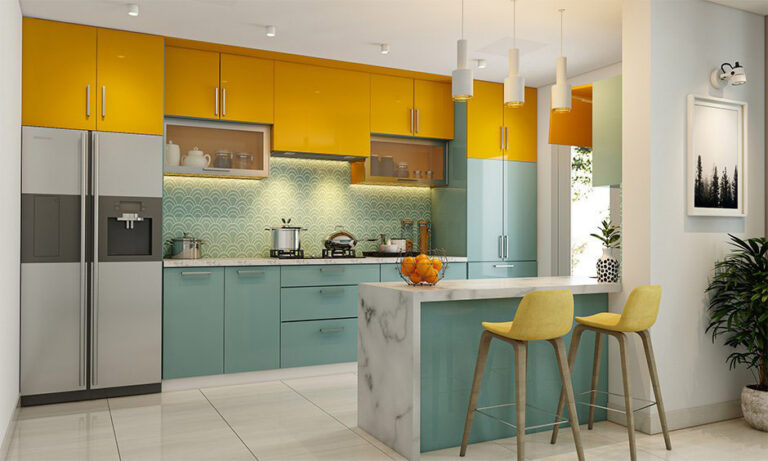
Work surfaces face each other across a central aisle, providing highly concentrated zones favored by professional chefs. This layout optimizes the work triangle by keeping all primary nodes within a single pivot step. However, multi-person movement is restricted when opposing drawer units are opened simultaneously.
L-Shaped Blueprints
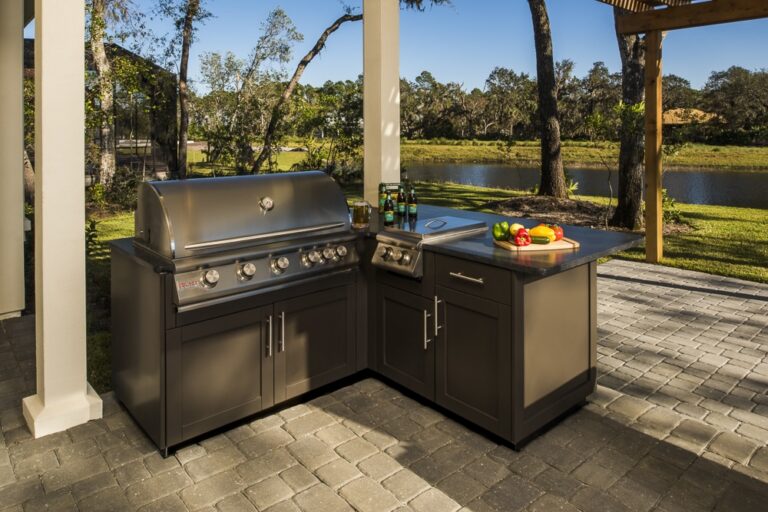
Cabinetry runs along two perpendicular walls, utilizing corner spaces effectively while leaving the remaining room open for dining tables. This configuration is highly effective for corner optimization, provided that specialized kinetic shelving is installed. Without these mechanisms, deep corners become dead, inaccessible zones.
U-Shaped Arrangements
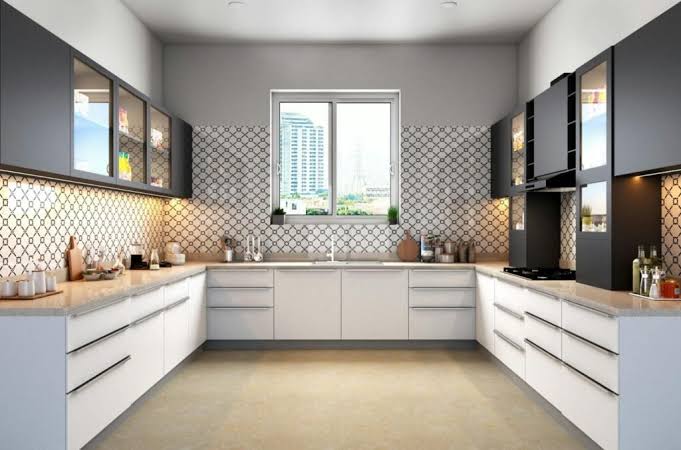
High-density storage and countertop surfaces wrap around three walls, creating a secure cooking zone that completely blocks through-traffic. This layout provides maximum counter space for complex prep workflows. It requires careful planning of corner intersections to prevent door hardware from colliding.
Island and Peninsula Enhancements
A freestanding central module is introduced into an open plan, creating an active social interface while providing additional utility pathways. Sinks and cooktops can be relocated to the island, turning it into the primary prep node. This modification requires under-floor plumbing and electrical trenching.
Technical Material Comparison
| Configuration Criteria | Primary Substrate Material | Structural Density | Moisture Resistance Rating |
| High-Moisture Prep Zones | BWP Marine Plywood | $750\text{ kg/m}^3$ | Outstanding (Boiling Water Proof) |
| Decorative Door Fronts | High-Density Fiberboard | $850\text{ kg/m}^3$ | Moderate (Requires Outer Seal) |
| Dry Overhead Modules | Commercial Particle Board | $600\text{ kg/m}^3$ | Low (Susceptible to Swelling) |
| Coastal Environmental Zones | PVC Architectural Board | $550\text{ kg/m}^3$ | Absolute (Waterproof Polymer) |
Realistic Decision Logic
The choice of substrate must be dictated by environmental hazards rather than cost savings. Sink bases should always be constructed from BWP marine plywood due to the constant risk of pipe condensation. Overhead units can utilize high-density fiberboard to optimize weight distribution without sacrificing structural integrity.
Detailed Real-World Scenarios Top Modular Kitchen Plans
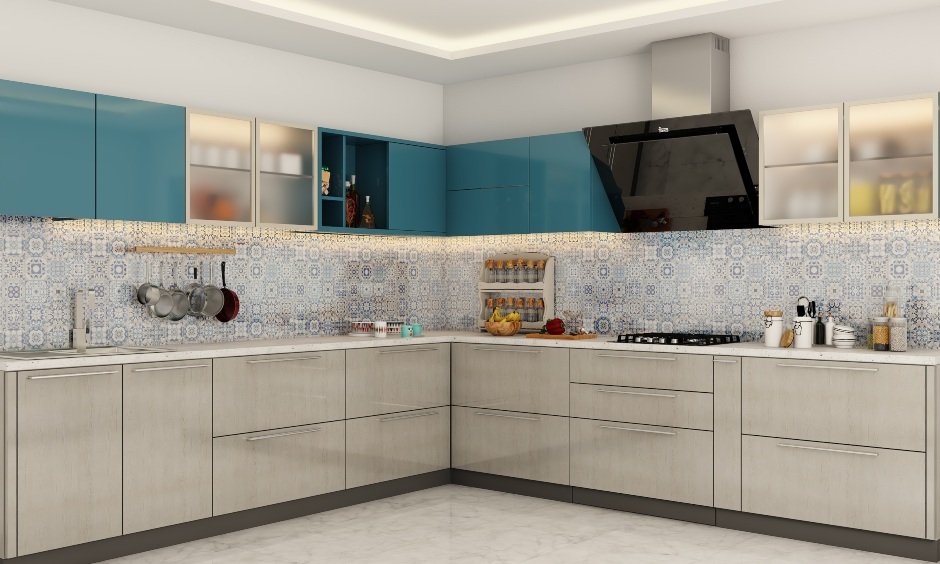
The selection of top modular kitchen plans must follow a logical path based on real-world structural constraints and local environmental factors.
The High-Rise Urban Condominium
In a metropolitan apartment measuring under 700 total square feet, space optimization is the primary objective. A galley-style modular plan is typically selected because it keeps utility lines concentrated along structural service shafts. The primary constraint is aisle width, which must be maintained at a minimum of 48 inches to allow appliance doors to open fully. Failure to account for this clearance can lead to mechanical damage when opposing handles collide.
The Suburban Multi-Generational Home
Large suburban residences with open floor plans require layouts that accommodate multiple cooks simultaneously. An L-shaped modular configuration enhanced by a large central island represents the most effective structural response. This layout permits the primary cooking triangle to remain isolated on the perimeter walls while the island serves as a distinct secondary preparation station.
The Historic Brick Brownstone Remodel
Remodeling an older home with irregular, non-plumb masonry walls presents unique alignment challenges. Standard factory modules cannot assume that corners are perfectly square. In this scenario, an L-shaped plan utilizing adjustable filler panels is specified to absorb wall variations without requiring costly masonry restructuring.
The Coastal Environmental Zone
Properties located near oceanfronts face extreme humidity and salt-air corrosion. A U-shaped plan constructed with PVC architectural boards and 316-grade stainless steel hardware is mandatory in these environments. If standard particle board substrates are installed, the damp marine air will induce structural sagging within twenty-four months.
Planning, Cost, and Resource Dynamics
Investment in a modular kitchen is characterized by upfront infrastructure costs that dictate long-term performance. Capital allocation must be balanced between visible finishes and hidden structural foundations.
Capital Allocation Distribution
| Project Phase Component | Financial Allocation Range | Primary Cost Drivers |
| Cabinet Carcass Substrates | 30% – 40% | Core material grade (BWP Plywood vs. MDF) |
| Kinetic Hardware Systems | 15% – 20% | Weight capacity ratings, dynamic fluid dampers |
| Countertop Material Fabrication | 20% – 25% | Slab rarity (Natural Quartzite vs. Engineered Quartz) |
| Appliance Integration | 15% – 25% | Built-in flush profiles vs. standard freestanding |
| MEP Infrastructure Labor | 10% – 15% | Plumbing relocation distance, electrical upgrades |
Structural Resource Realities
Trenching for water lines and dedicated electrical circuits over long distances can easily exceed the cost of the cabinetry. If an existing electrical panel lacks the capacity to support an induction cooktop, an expensive panel upgrade must be executed. This infrastructure adjustment must be completed before any hardscaping or cabinetry mounting begins.
Opportunity Cost Analysis
Imported modular systems often require a twelve-week production and shipping window. If structural dimensions are miscalculated on-site, a single missing filler piece can halt construction for weeks. Sourcing components from regional manufacturers mitigates this risk by accelerating lead times for replacement parts.
Tools, Strategies, and Support Systems
Executing a flawless modular installation requires a clear understanding of the regulatory and mechanical dependencies involved in residential construction.
-
Laser Alignment Matrix Systems: Digital cross-line lasers are used during installation to project perfectly level references across uneven subfloors.
-
Three-Way Adjustment Hinges: Concealed mechanical hinges allow installers to align doors precisely along the horizontal, vertical, and depth axes.
-
High-CFM Mechanical Ventilation: High-capacity exhaust hoods are integrated to remove grease particles and protect upper cabinetry finishes from heat damage.
-
Under-Mount Support Channels: Steel reinforcement bars are installed beneath heavy stone countertops to distribute weight evenly across the cabinet frames.
-
GFCI Circuit Interrupters: Code-mandated safety switches designed to cut power instantly when moisture is detected near countertop outlets.
-
Moisture Absorption Shields: Specialized aluminum foil liners are installed inside sink base cabinets to protect substrates from plumbing condensation.
-
Threaded Micro-Leveling Legs: Heavy-duty polymer feet are attached to carcass bases to compensate for sloping floor tiles.
Risk Landscape and Failure Modes
The long-term degradation of a modular kitchen setup is rarely caused by a single accident. Instead, it is driven by compounding environmental factors and neglected maintenance vectors.
Moisture Accumulation Cascade
Moisture penetration at raw material edges is the single most destructive failure mode in modular cabinetry. Even when moisture-resistant substrates are utilized, unsealed cutouts made for plumbing lines leave raw edges exposed to ambient humidity.
Thermal Stress Vectors
Thermal stress represents a secondary failure vector that threatens high-pressure laminate finishes. Dishwashers that vent hot steam from their front panels can slowly cook the edges of adjacent cabinet doors over time. This continuous thermal cycling degrades the polyurethane adhesives used to bond laminate faces to the underlying wood core.
Countertop Fracturing Risks
Countertop fracturing is a structural failure mode that occurs when stone surfaces are placed over unlevel cabinet runs. If a modular base installation deviates by even a fraction of an inch across a ten-foot span, heavy granite or quartz slabs will span microscopic structural voids. When heavy objects are placed on these unsupported zones, the resulting concentration of stress can cause the stone to snap along natural vein lines.
Governance, Maintenance, and Long-Term Adaptation
Preserving the structural integrity and aesthetic finish of a modular installation requires a disciplined, programmatic approach to maintenance. This preventive cycle should be executed semi-annually to catch minor component wear before it transitions into systemic failure.
Bi-Annual Technical Inspection Protocol
A rigorous inspection routine must be established to monitor the mechanical parts of the kitchen ecosystem. Focus should be directed toward high-traffic drawers and moisture-prone storage bays.
-
Fastener Torque Assessment: Tighten all mounting screws on door hinges to correct minor sagging and maintain uniform gaps between doors.
-
Kinetic Slide Rail Clearance: Clear dust and debris from undermount drawer slide rails using compressed air, and apply a light coat of dry silicone lubricant.
-
Silicone Joint Evaluation: Inspect the structural silicone beads sealing the seam between the countertop and the backsplash for signs of cracking or peeling.
-
Appliance Gasket Cleaning: Clean refrigerator and dishwasher door gaskets with a mild detergent to ensure a tight seal and prevent thermal energy leaks.
Surface Chemical Governance
Cabinet door faces require careful chemical management during routine cleaning cycles to avoid surface degradation. Abrasive cleaning powders, steel wool pads, and strong chemical solvents containing acetone or ammonia must be avoided entirely. These harsh agents will strip away protective UV topcoats, leaving high-gloss or matte polymer finishes vulnerable to permanent yellowing and superficial scratching.
Measurement, Tracking, and Evaluation
Evaluating the operational health of top modular kitchen plans relies on tracking both immediate physical indicators and long-term structural changes.
Metrics Framework
-
Leading Indicators: Monthly tracking of refrigerator power consumption anomalies (indicating failing seals) and the immediate appearance of hairline fractures in masonry grout lines.
-
Lagging Indicators: Structural shifts measured by a digital level across countertop planes over a rolling five-year period, indicating foundation settling or structural decay.
Diagnostic Documentation Examples
When logging a maintenance or calibration event, entry formats must remain precise to trace recurring environmental vulnerabilities across the structural layout:
Maintenance Log Entry 01: June 22, 2026
Component Identification: Base Module Sink Cabinet Left Door Hinge
Diagnostic Observation: A 1.5mm vertical sag was detected due to fastener loosening under high usage load. Screws retorqued to specification; door face realigned within the 0.5mm tolerance threshold.
Maintenance Log Entry 02: November 14, 2026
Component Identification: Dishwasher Interface Edge Banding
Diagnostic Observation: Minor adhesive softening was observed along the top edge of the adjacent drawer module. Heat-reflective deflector shielding was installed to reroute exhaust steam away from the substrate.
Common Misconceptions and Industry Myths
A widespread myth in the residential remodeling market is that all engineered composite wood options are inherently inferior to solid timber. Consumers often demand solid wood cabinets, believing they represent the ultimate choice for durability. In reality, solid wood moves constantly in response to shifting interior humidity levels, making it a poor choice for precision modular doors. Engineered substrates like marine plywood and high-density fiberboard provide the absolute dimensional stability required for clean architectural lines.
Another common misconception is that adding more drawers to a kitchen plan will automatically increase total project costs without providing a clear return on value. While drawer modules require a larger upfront investment in mechanical hardware compared to standard shutter-and-shelf cabinets, their spatial utility is vastly superior. Drawers allow users to access the entire depth of a lower cabinet without kneeling, effectively doubling the usable storage density while reducing physical strain on the operator.
Furthermore, many buyers believe that water-resistant materials are completely waterproof. This confusion often leads to negligence regarding interior cabinet spills. No engineered wood product can withstand standing water indefinitely; even marine plywood will eventually degrade if liquid is allowed to pool in corners for weeks. Immediate containment of internal leaks remains a mandatory operational requirement regardless of the substrate specification.
Ethical and Practical Considerations
Sourcing materials for a large-scale residential renovation requires an evaluation of environmental impacts and supply chain ethics. Formaldehyde emissions from cheap composite boards represent a significant indoor air quality hazard. Responsible planning demands the specification of low-emission substrates that conform to E1 or E0 international safety standards.
Deforestation pressures must also be countered by choosing wood fibers certified by the Forest Stewardship Council (FSC). This certification ensures that the timber used in plywood or fiberboard manufacturing is harvested from responsibly managed forests. Balancing long-term structural durability with sustainable sourcing practices represents the final hallmark of true architectural mastery.
Conclusion
Building an efficient culinary space requires moving past surface-level trends and focusing on material compatibility and structural engineering. The long-term value of top modular kitchen plans is fundamentally tied to how effectively they manage the challenges of water, heat, and daily mechanical wear. By anchoring the design process in robust structural frameworks, using premium substrates suited to the local environment, and maintaining a regular upkeep schedule, homeowners can create an enduring workspace that performs exceptionally for decades.