Compare Outdoor Kitchen Systems: Structural Engineering And Material Guide
The rapid expansion of the residential outdoor living sector has transformed the backyard from a simple site for portable grilling appliances into a space for highly complex architectural installations. Compare Outdoor Kitchen Systems. Specifying a permanent exterior culinary environment requires an objective, comprehensive evaluation of competing fabrication methodologies. When homeowners choose an exterior island without evaluating structural mechanics, site-specific climate pressures, and material interfaces, significant degradation of the asset usually occurs within a few seasons.
Modern exterior kitchens are complex mechanical, plumbing, and structural assemblies that must survive continuous exposure to harsh environmental conditions. They face severe weather challenges, including solar radiation, water ingress, and freeze-thaw cycles, while simultaneously managing internal high-temperature thermal loads. A rigorous comparative analysis must go beyond superficial aesthetic considerations to evaluate the core engineering of these systems.
Evaluating competing construction models requires a thorough understanding of the relationship between structural frameworks and the surrounding landscape. Choosing the wrong system can lead to serious hidden costs, such as extensive site preparation, specialized utility connections, and frequent material maintenance. This analysis provides the technical data and design frameworks required to evaluate, specify, and deploy high-performance exterior kitchen systems that deliver long-term durability and functionality.
Compare outdoor kitchen systems
To compare outdoor kitchen systems effectively, designers must evaluate multiple competing factors beyond simple upfront costs. The phrase represents an analytical challenge that forces architects and homeowners to weigh the benefits of site-built masonry against pre-engineered modular setups and factory-finished cabinetry lines. Each approach features distinct load-bearing characteristics, installation timeframes, and performance limitations when exposed to extreme weather.
Oversimplification remains a widespread problem when consumers compare outdoor kitchen systems using only superficial criteria. Selecting a configuration based solely on showroom aesthetics or catalog images frequently leads to serious integration failures during on-site installation. A system that performs perfectly in an arid, stable climate can suffer catastrophic structural failure when installed in an environment subject to extreme winter frost heave or high coastal humidity.
A professional structural comparison must analyze the structural interface between the island sub-frame and the supporting patio or deck slab. The selected assembly must accommodate the thermal expansion and contraction of metal components without stressing natural stone countertops or cracking rigid masonry finishes. True technical mastery requires evaluating these underlying material dynamics to choose a system that delivers reliable performance over its operational lifespan.
Structural Load Distribution Dynamics
A comprehensive comparison must account for the dead weight of the selected system and its impact on the supporting foundation. Traditional wet-lay masonry requires massive, deep concrete footings to prevent uneven settling and cracking over time.
Mechanical Utility Accommodation
The ease with which gas, electrical, and plumbing lines can be integrated varies significantly across different construction methodologies. Pre-engineered modular islands feature built-in utility runways and pre-punched access ports that simplify utility connections. Masonry structures require precise layout of conduits before pouring concrete or laying stone block, leaving zero margin for error if an appliance specification changes later in the process.
Historical and Systemic Evolution of Exterior Culinary Construction
The historical trajectory of permanent outdoor cooking structures began with rudimentary brick barbecue pits constructed in mid-twentieth-century American suburbs. These early structures were assembled using local clay bricks and standard Portland cement mortar, functioning as basic enclosures for simple charcoal grates. While these heavy installations provided excellent fire resistance, they lacked weather-sealed storage options and counter surfaces for food preparation.
During the building boom of the late 1990s, the concept of the backyard cooking island shifted toward replicating the full functionality of premium indoor kitchens. Builders began utilizing light-gauge steel stud framing wrapped in cement backer board and finished with synthetic stucco or thin stone veneer. This methodology allowed for fast construction and flexible layouts, but it introduced new durability issues due to internal frame corrosion and moisture trapping within unvented wall cavities.
In the current architectural landscape, exterior kitchen systems have evolved into highly engineered, factory-fabricated assemblies. Advanced manufacturing allows for the precise production of modular aluminum frames, high-density polymer cabinetry, and marine-grade stainless steel storage modules. This industrialization has shifted the industry away from unpredictable on-site labor toward reliable, pre-tested systems designed to withstand severe weather exposure over decades.
Evolution of Component Standardization
Early custom exterior installations suffered from a lack of standardized dimensions, forcing builders to modify structures on-site to fit specific appliances. The introduction of standardized appliance cutout dimensions revolutionized the fabrication process. Modern modular systems utilize adjustable rail frameworks that can adapt to different premium grill brands without requiring structural cutting or welding.
The Rise of Climate-Adaptive Engineering
Older exterior structures frequently utilized interior-grade finishes that deteriorated quickly under direct UV exposure and rain. Modern engineering has introduced specialized coatings, fluoropolymer finishes, and chemically stabilized polymers designed to reflect solar heat and resist chemical oxidation. This focus on material science ensures that contemporary systems preserve both their structural integrity and visual appearance over time.
Thermodynamic and Mechanical Engineering Frameworks
Designing a resilient exterior kitchen requires evaluating the thermodynamic forces generated by high-output cooking appliances and the mechanical stresses caused by environmental exposure.
Thermal Expansion and Coefficient Management
Metal sub-frames, natural stone countertops, and polymer cabinet doors expand and contract at completely different rates when subjected to temperature shifts. For instance, aluminum features a high coefficient of thermal expansion compared to natural granite or concrete substrates.
Airflow and Combustion Dynamics
High-performance gas grills regularly generate thermal loads exceeding 60,000 BTUs, requiring significant fresh air circulation for clean combustion. When a grill is installed in an enclosed island carcass, adequate low-level and high-level ventilation louvers must be included to prevent gas accumulation and overheating. Proper ventilation design ensures that rising hot air pulls cool ambient air through the lower vents, maintaining safe internal temperatures.
Fluid Ingress and Capillary Action Prevention
Rain and ambient dew will naturally penetrate microscopic cracks in countertop seams and grout lines. Exterior systems must include a clear path for water drainage, using gravity to shed water before it can puddle on internal surfaces. Incorporating explicit drip edges beneath countertop overhangs breaks the surface tension of water, preventing liquid from traveling horizontally into cabinet openings and rusting sensitive internal hardware.
Core Fabrication Methodologies and Material Substrates
Exterior kitchen installations are classified into distinct structural families, each presenting specific engineering trade-offs regarding durability, weight, and installation complexity.
Wet-Lay Masonry and Concrete Block Construction
Traditional masonry relies on stacking heavy concrete blocks on a reinforced concrete slab, creating a completely solid, fireproof structure. This approach allows for any custom shape and can be finished with thick natural stone veneer or custom stucco to match the home’s architecture. The main drawbacks are the extreme weight, which averages 150 to 300 pounds per linear foot, and the long, labor-intensive installation process that is dependent on dry weather conditions.
Light-Gauge Welded Aluminum Frameworks
Pre-welded structural aluminum systems offer a high-strength, lightweight alternative to heavy masonry. Aluminum forms an un-reactive, protective oxide layer that prevents deep structural rust, making it an exceptional option for coastal regions with high salt exposure.
High-Density Polyethylene (HDPE) Cabinetry Systems
Marine-grade polymer panels provide a cabinetry-based system that mirrors the look of premium indoor kitchens while resisting outdoor elements. HDPE is completely waterproof, solid-colored throughout to hide scratches, and immune to rot and wood-boring insects. However, because polymers feature high rates of thermal movement, these systems must utilize specific oversized fastening holes and floating expansion joints to prevent warping during seasonal temperature extremes.
Premium Modular Stainless Steel Assemblies
All-stainless cabinetry systems represent the pinnacle of durability and fire resistance for modern exterior installations. Constructed primarily from 14-gauge to 18-gauge 304 or 316 stainless steel, these systems provide exceptional structural rigidity and complete protection against water ingress. The primary challenges are the high upfront cost and the requirement for regular surface treatments with passivating oils to prevent superficial tea-staining caused by environmental pollutants.
Architectural Core Methodology Comparison
| Structural Typology | Weight Matrix | Fire Resistance Rating | Assembly Speed | Skill Dependency |
| Wet-Lay Masonry | Extreme (150-300 lbs/ft) | Absolute Fireproof | Very Slow (Weeks) | Master Mason Required |
| Welded Aluminum | Low (25-40 lbs/ft) | Non-Combustible | Rapid (Days) | Intermediate Carpentry |
| HDPE Polymer | Medium (35-50 lbs/ft) | Melts Under High Heat | Moderate (Days) | Basic Carpentry |
| Stainless Steel | High (60-90 lbs/ft) | Absolute Fireproof | Fast (Hours) | Factory Pre-Assembled |
Structural Selection Logic
Choosing between these core systems requires analyzing the installation site’s load-bearing limits and the local climate. If a system is being installed on a raised wood deck, masonry must be excluded due to its weight, making engineered aluminum or stainless steel the logical choice. For unshaded, sun-exposed patios in high-UV zones, stainless steel and aluminum provide superior durability compared to polymers, which can soften under prolonged exposure to extreme heat.
Real-World Scenarios and Site-Specific Pressures Compare Outdoor Kitchen Systems
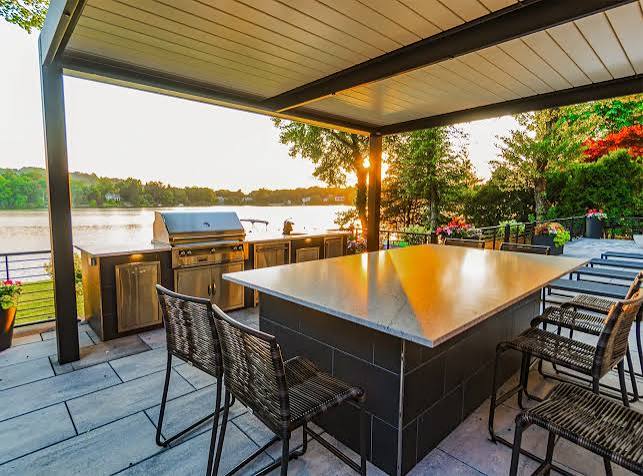
The long-term performance of an exterior kitchen system depends on how well its structural design is adapted to localized environmental pressures.
Scenario A: The Oceanfront Splash Zone
An upscale home located along the coast of Southern California requires an island positioned next to a saltwater pool. This environment features continuous exposure to ambient salt air, high UV radiation, and chlorine splash-back.
-
System Selection: Fully custom 316 marine-grade stainless steel cabinetry finished with an ultra-durable powder coating.
-
Critical Constraint: Standard 304 stainless steel will develop severe pitting corrosion in this environment, making 316-grade steel with added molybdenum mandatory.
-
Failure Mode: Using standard zinc-plated carbon steel fasteners will cause rapid galvanic corrosion where the fasteners contact the stainless steel frame, leading to structural failure. This is avoided by utilizing matching 316 stainless fasteners with nylon isolation washers.
Scenario B: The Sub-Zero Mountain Terrace
A ski-in property located in Aspen, Colorado, experiences intense alpine winters with heavy snowfall and temperatures dropping well below zero, followed by dry, sunny summers.
-
System Selection: Pre-cast glass fiber reinforced concrete (GFRC) structural panels over an open aluminum sub-frame, topped with natural quartzite slabs.
-
Critical Constraint: The system must withstand intense freeze-thaw cycles without trapping water inside the core walls, which would expand and shatter stone veneers.
-
Failure Mode: If water lines are not completely cleared of moisture before winter, the residual water will freeze, expand, and rupture internal plumbing valves. This requires installing an integrated pneumatic blowout system to drain lines effortlessly.
-
Second-Order Effect: Heavy snow loads sitting on the island can compress cabinet doors, misaligning hinges and causing binding issues if the top frame lacks sufficient cross-bracing.
Scenario C: The Urban Rooftop Penthouse
An entertainment deck on the 40th floor of a downtown Chicago skyscraper requires a full-service culinary island.
-
System Selection: Pre-engineered modular aluminum frame units bolted together and anchored to the building’s structural concrete deck.
-
Critical Constraint: Strict building weight limits prevent the use of masonry, while extreme wind uplift forces require rock-solid mechanical anchoring.
-
Failure Mode: High wind gusts can rip unanchored cabinet doors open, bending hinges and tearing doors off their frames. This requires heavy-duty magnetic latches with a 20-pound pull rating on all doors.
-
Second-Order Effect: Wind currents can disrupt the grill’s exhaust path, pushing heat back toward the control knobs and melting internal ignition wires if an engineered wind deflector is not installed.
Financial Engineering and Life-Cycle Capital Dynamics
Deploying a high-performance exterior kitchen requires analyzing long-term operational and replacement costs alongside initial installation expenses.
Total Cost of Ownership Projections
| Fabrication Tier | Initial Capital Cost (Per Foot) | Site Prep & Labor Costs | 10-Year Maintenance Cost | Estimated Lifespan |
| Economy Modular Kit | $250 – $400 | Low ($500 – $1,000) | High ($2,000 – $3,000) | 3 – 5 Years |
| Custom Masonry | $800 – $1,500 | Very High ($3k – $7k) | Low ($500 – $1,000) | 25+ Years |
| Engineered Aluminum | $600 – $1,100 | Moderate ($1k – $3k) | Very Low ($200 – $500) | 20+ Years |
| Premium Stainless | $1,200 – $2,200 | Low ($1k – $2k) | Moderate ($1k – $1,500) | 25+ Years |
The Myth of Low-Cost Retail Systems
Inexpensive exterior kitchen kits sold at big-box retailers look like an attractive, budget-friendly option. However, these systems are typically built from thin 430-grade stainless steel or low-density plastic composites that degrade rapidly under weather exposure. When the internal framing rusts out or warps after a few seasons, the homeowner faces the expensive task of tearing out the entire unit, discarding the integrated appliances, and rebuilding the space from scratch.
Investment Value and Capital Retention
An engineered exterior kitchen built from premium, climate-appropriate materials functions as a permanent improvement that adds measurable value to the property. High-grade systems retain their structural functionality and visual appeal over decades, protecting the initial capital investment. Selecting durable, low-maintenance materials minimizes ongoing repair and restoration costs, delivering a far better return on investment over the asset’s lifespan.
Operational Risk Profiles and Taxonomy of Failure Modes
The breakdown of an exterior cooking environment is rarely caused by a single isolated component failure. It is typically the result of compounding environmental factors and deferred maintenance schedules.
The Trapped Moisture Corrosion Loop
When an outdoor kitchen island is sealed without proper interior drainage or ventilation, ambient humidity condenses on cold internal metal surfaces overnight.
This hidden water accumulation creates a high-humidity environment within the island frame. Over time, this trapped moisture attacks structural screws, shelf brackets, and appliance gas connections, causing extensive rust long before any signs of damage appear on the exterior panels.
Structural Countertop Cracking Mechanics
Natural stone slabs possess high compressive strength but very low flexibility. If an island sub-frame is installed on a base that settles unevenly—such as a paver patio without a concrete foundation—the frame will warp slightly under the weight of the stone. This movement concentrates immense structural stress on the thinnest parts of the countertop, typically around the sink or grill cutouts, leading to large fractures across the slab.
Gas pooling hazards
Liquid propane is significantly heavier than ambient air, causing it to sink and pool in the lowest areas of an enclosed space if a leak occurs. If a masonry or cabinetry island lacks low-level ventilation louvers, escaped propane gas will pool silently inside the cabinet bases.
Maintenance Governance Protocols and Material Preservation
Sustaining the structural integrity and appearance of an exterior culinary asset requires a disciplined, programmatic approach to seasonal maintenance.
Semi-Annual Technical Maintenance Checklist
To protect mechanical, electrical, and structural systems from weather-related damage, a comprehensive maintenance protocol should be executed every spring and autumn.
-
Gas Line Integrity Testing: Apply a specialized gas-leak detection solution to all flexible hoses, brass fittings, and manifold connections to check for bubbles indicating a micro-leak.
-
Hinge and Slide Lubrication: Clean out dust, pollen, and debris from drawer tracks, and apply a thin layer of dry-film fluoropolymer lubricant to prevent mechanical binding.
-
Stone Sealer Application: Clean all natural stone countertops with a pH-neutral cleaner, let dry for 24 hours, and apply a high-performance solvent-based fluoropolymer stone sealer to protect against oil stains.
-
Electrical Enclosure Inspection: Turn off the main circuit breaker, open all exterior outlet boxes, and inspect internal wiring for moisture ingress, insect nesting, or degraded insulation.
Chemical Surface Maintenance
Stainless steel surfaces must be cleaned carefully to prevent damage to the protective chromium oxide layer. Household cleaners containing bleach, chlorine, or hydrochloric acid will attack the metal surface, causing immediate chemical staining and accelerating pitting rust. Maintenance teams should use specialized stainless steel cleaners along with non-abrasive microfiber cloths, always wiping in the direction of the metal grain to prevent scratching.
Quantitative Performance Metrics and Tracking Calibration
Evaluating the long-term structural and mechanical health of an outdoor kitchen relies on monitoring specific physical indicators and structural shifts over time.
System Verification Log Entries
-
Leading Operational Indicators: Monthly checks of refrigeration compressor run times during hot weather and monitoring structural silicone seals along high-stress countertop joints.
-
Lagging Performance Indicators: Annual measurements of structural level across countertop planes using a digital level to identify foundation settling or framing movement.
Structural Inspection Log Examples
When conducting routine inspections or technical calibrations, details must be logged precisely to identify long-term environmental patterns:
System Log Entry 01: March 18, 2026
Component Identification: Center Section Frame Support Column B
Diagnostic Observation: A 1.5mm leveling shift was recorded along the western countertop edge following a severe winter freeze. All adjustable polymer alignment feet were tuned to bring the slab back to a perfect horizontal plane.
System Log Entry 02: June 11, 2026
Component Identification: Primary Grill Gas Manifold Connection
Diagnostic Observation: Routine pressure testing revealed a minor pressure drop at the primary regulator fitting. The weathered brass compression fitting was replaced, and a fresh leak test confirmed zero gas escaping under full operating pressure.
Demolishing Common Industry Misconceptions
A widespread myth in the outdoor design industry is that any product labeled “stainless steel” is completely rustproof and requires zero maintenance. Consumers often buy low-grade 430-steel components, only to see orange rust stains form within their first season of rain exposure. Long-term durability requires a minimum specification of 304-grade steel for inland areas, while coastal installations demand 316-grade marine steel.
Another common misunderstanding is that outdoor cooking areas do not require mechanical ventilation if they are located under an open pavilion or wooden pergola. This error often results in smoke and heat damage to expensive overhead structures. High-output gas grills release significant amounts of vaporized grease and carbon monoxide during cooking, which trap easily under solid roofs.
Additionally, many designers believe that natural granite is completely indestructible when exposed to external weather conditions. While granite holds up exceptionally well against scratching, darker varieties absorb immense amounts of solar energy under direct sunlight, heating the surface enough to cause skin burns on contact. Selecting light-colored quartzite or installing structural shading is essential for a comfortable cooking and hosting experience during summer.
Regulatory, Ethical, and Sustainable Sourcing Requirements
Sourcing construction materials for a large-scale exterior project requires evaluating long-term environmental impacts and local building code regulations. Low-grade polymers and cheap composite panels often contain volatile organic compounds and chemical stabilizers that can leach into surrounding soil systems during heavy rain. High-end architectural specifications demand materials certified by international safety bodies to guarantee environmental neutrality.
Deforestation pressures must be countered by choosing high-density polyethylene structures that utilize recycled marine plastics, or by selecting stone materials harvested from certified sustainable quarries. Minimizing the carbon footprint of a project involves sourcing framing components from regional fabricators, which reduces transportation emissions while supporting local manufacturing economies. Balancing luxury design with sustainable execution is a core indicator of true technical mastery.
Conclusion
Specifying a premium exterior culinary environment requires moving past basic aesthetic trends to focus on material compatibility and structural engineering. The long-term value of an outdoor kitchen is fundamentally tied to how effectively it manages the challenges of water, heat, and structural loads. By anchoring the design process in robust structural frameworks, using premium substrates suited to the local climate, and maintaining a regular upkeep schedule, designers can create an enduring hospitality space that performs exceptionally for decades.