Best Luxury Kitchens In The Us: Expert Architectural Guide
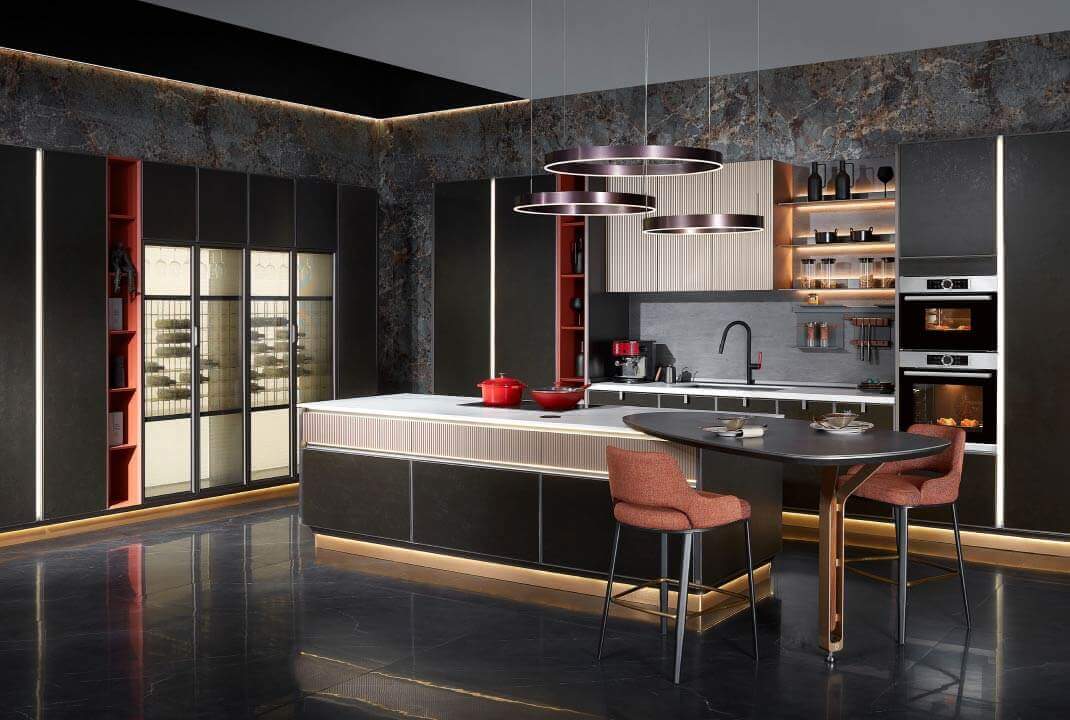
The modern high-end culinary space has transcended its traditional role as a mere service zone. Today, these environments represent the convergence of sophisticated industrial engineering, artisanal craftsmanship, and precise ergonomics. Discerning homeowners demand spaces that operate with the efficiency of a commercial galley while maintaining the refined aesthetics of a curated gallery. Best Luxury Kitchens In The US. Achieving this balance requires deep technical knowledge of material science and spatial flow.
Complexity remains the defining characteristic of elite residential design. Every element, from the integration of climate-controlled preservation systems to the placement of custom-forged hardware, demands rigorous planning. Projects of this caliber are rarely finished through simple catalogue selections. Instead, they are the product of exhaustive collaboration between architects, specialized engineers, and bespoke cabinet makers.
This analysis examines the pillars of superior residential design within the American landscape. It provides an objective look at what distinguishes an exceptional kitchen from a standard high-end renovation. By deconstructing the systemic requirements of these projects, we establish a definitive reference for those seeking to understand the vanguard of domestic architecture.
Understanding “best luxury kitchens in the us”
When professionals evaluate the best luxury kitchens in the us, they avoid superficial assessments of style. True excellence is defined by the seamless integration of high-performance hardware within a cohesive architectural volume. A common error involves prioritizing veneer and finish over the structural skeleton of the cabinetry or the precision of the ventilation systems. These high-end spaces succeed only when the technical backbone supports the aesthetic vision.
The Problem of Oversimplification
Marketing narratives often reduce luxury to a list of expensive appliances. However, a range from a premier manufacturer becomes obsolete if the ventilation ducting is incorrectly sized or the gas pressure is insufficient. Authentic quality is measured by the performance of the integrated system. Oversimplification risks creating an environment that looks sophisticated but functions poorly under professional demand.
Defining Architectural Cohesion
The superior culinary space must respect the broader home geometry. Excellence is achieved when the kitchen functions as an extension of the living area rather than an isolated utility room. Professional planners examine sightlines, natural lighting patterns, and material transitions. This holistic perspective elevates a kitchen beyond individual components, transforming it into a cohesive architectural achievement.
Deep Contextual Background of American Kitchen Evolution
Domestic cooking spaces have undergone radical transformations since the mid-twentieth century. Initial models focused heavily on standardized mass production and functional efficiency. As affluence increased, the focus shifted toward social integration. The island, once a secondary storage unit, evolved into a central hub for interaction and preparation.
The Industrial Influence
The influence of professional galley design became pronounced during the late nineties. High-output heat sources, heavy-gauge stainless steel, and commercial refrigeration became standard expectations for top-tier residential builds. This era established the aesthetic standard that currently dominates the market. Owners demanded the capacity to host events with the technical rigor of professional staff.
The Contemporary Shift
Currently, the trend is moving toward invisible technology and integrated mechanical systems. High-end kitchens now emphasize clean lines, with heavy-duty appliances hidden behind custom panels. Sophisticated automation handles lighting and temperature control behind the scenes. The result is a space that remains visually serene while delivering extreme technical capacity.
Conceptual Frameworks for Elite Design
The Triangulation of Workflow
This framework organizes the primary zones—preservation, preparation, and cleaning—to minimize redundant movement. The objective is to reduce the energy expenditure of the chef. Precision in these distances dictates the operational success of the entire room.
The Thermal Performance Standard
This model treats the kitchen as a thermodynamic zone. Managing the heat generated by professional-grade equipment requires advanced air exchange systems. High-performance design ensures that excessive heat, moisture, and odors are removed without creating noise pollution.
The Material Compatibility Matrix
Every surface is selected based on its porosity, heat resistance, and long-term durability. The model avoids combining materials that react negatively to heat or humidity. This scientific approach preserves the aesthetic integrity of the surfaces over decades of usage.
Key Categories and Variations of Elite Design
| Category | Primary Focus | Trade-offs | Ideal Application |
| Industrial Professional | Extreme Output | High noise levels | The serious home chef |
| Minimalist Integrated | Hidden Tech | Complex engineering | Open-plan residences |
| Artisanal Craft | Custom Details | Long lead times | Historical restorations |
| Modern Tech-Forward | Automation | Regular updates | Smart home enthusiasts |
Decision logic for these spaces is driven by the intended use pattern of the residents. Those focused on culinary craft prioritize high-output hardware. Those valuing social entertaining prioritize refined surfaces and silent mechanical performance.
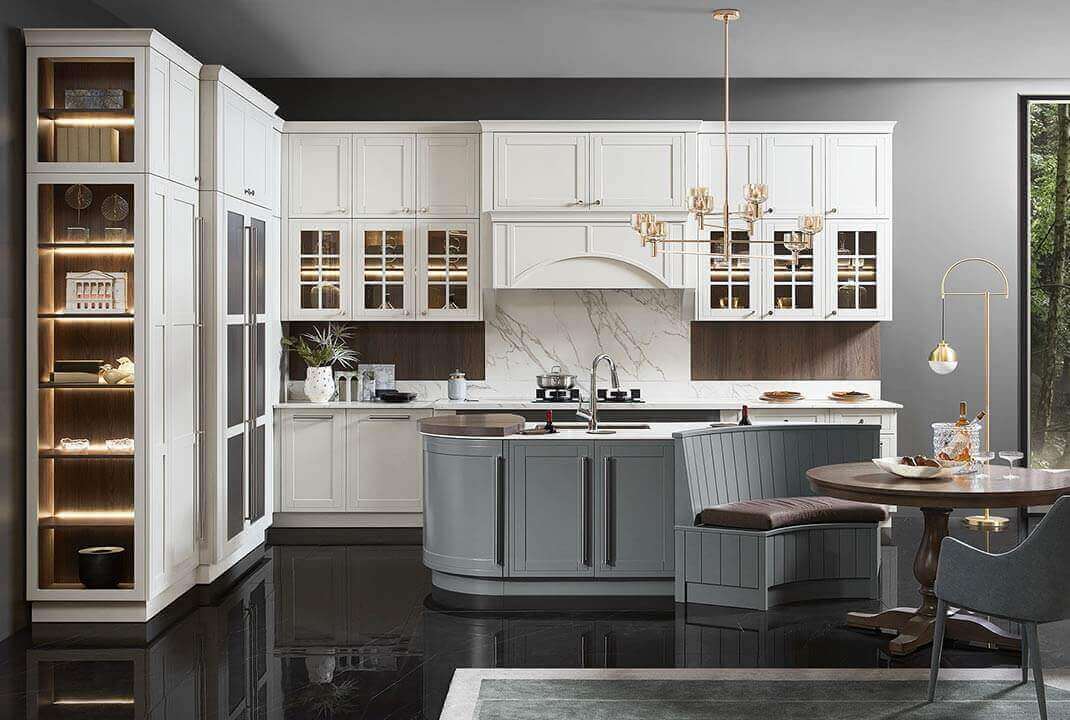
Detailed Real-World Scenarios Best Luxury Kitchens In The Us
The Coastal High-Performance Estate
This site required 316-grade stainless steel hardware to prevent rapid corrosion from salt-heavy air. The failure mode of standard 304-grade steel was avoided by strict adherence to marine-grade specifications. The kitchen achieved total performance stability in a hostile environment.
The Urban Penthouse Integration
Structural limits in high-rise buildings necessitated the use of lightweight, non-combustible cabinetry materials. The design team employed specialized venting to ensure compliance with strict fire codes. This precision-engineered kitchen operates silently in a dense residential environment.
The Multi-Generational Prep Hub
This project utilized dual-preparation zones to support simultaneous activity from different users. The layout avoided cross-contamination while maximizing social connectivity. Failure was avoided by ensuring that each zone possessed its own independent utility infrastructure.
Planning, Cost, and Resource Dynamics
| Phase | Investment | Primary Variable | Risk Level |
| Architectural Planning | Moderate | Design complexity | Low |
| Specialized Infrastructure | High | Utility routing | High |
| Custom Cabinetry/Finish | Very High | Artisanal availability | Moderate |
Resource dynamics for elite projects are driven by labor costs and logistical precision. Hidden infrastructure, such as sound dampening and high-capacity electrical upgrades, constitutes a large share of the budget. Fiscal success requires early and accurate forecasting of these non-aesthetic variables.
Tools, Strategies, and Support Systems
Digital Twin Modeling
Engineers use advanced software to verify spatial clearances and electrical load calculations before construction starts.
Climate-Controlled Pantry Systems
Dedicated environments ensure that wine and delicate ingredients are stored at optimal, stable temperatures.
Integrated Air Quality Monitoring
Sensors detect particulate levels from cooking, automatically adjusting the power of the ventilation system.
Sound Attenuation Systems
The placement of remote ventilation blowers significantly reduces noise during operation.
Custom-Forged Hardware
Bespoke handles and fixtures are designed for specific ergonomic profiles, ensuring ease of use.
Risk Landscape and Failure Modes
The primary failure mode in luxury design is the lack of proper ventilation. A system that cannot extract the heat and steam from professional appliances will cause rapid degradation of cabinet finishes. Compounding risks include improper electrical grounding, which leads to hardware malfunctions. A taxonomy of risk must categorize the failure of utility connections—stray electrical currents or acidic soil contact—to ensure only the most resilient materials are utilized.
Governance, Maintenance, and Long-Term Adaptation
A superior kitchen represents a complex mechanical system that requires regular governance. Biannual thermal inspections verify the integrity of the heat shields and the burner manifolds. Ignition diagnostics test the redundant electrical systems. For stone installations, the periodic application of sealants maintains the surface porosity. Establishing a formal maintenance routine ensures that the hardware remains at its peak performance level for the duration of its lifespan.
Measurement, Tracking, and Evaluation
-
Leading Indicators: The success of the initial airflow test after installation, confirming that the ventilation system pulls consistently without turbulence.
-
Lagging Indicators: The annual cost of replacement parts and technical service calls normalized against the usage frequency.
-
Documentation Example: The System Integrity Log, capturing the original design intent, the material compatibility matrix, and the results of annual performance reviews.
Keeping accurate records provides clarity on the ongoing health of the appliance network. Such data proves invaluable when troubleshooting performance problems later.
Common Misconceptions and Oversimplifications
-
Myth: “All expensive appliances perform equally.” Correction: Thermal mass, gas-flow dynamics, and material porosity vary so greatly that they define entirely different service needs.
-
Myth: “High-BTU ratings imply better results.” Correction: Power must be balanced against heat dissipation; excessive heat without control leads to uneven results.
-
Myth: “Luxury design is purely about aesthetic branding.” Correction: High-end performance is defined by the technical engineering of the sub-systems rather than the brand logo.
Ethical, Practical, and Contextual Considerations
The duty to create high-performance spaces is a core ethical obligation for any professional designer. It is a commitment to the owner that the space will remain safe, functional, and aesthetically stable regardless of usage intensity. This reflects the practical realization of high-performance design, acknowledging that the most significant failure points in any building system are the interfaces where materials and heat meet.
The true mark of an excellent installation is one that functions perfectly while remaining resilient to years of exposure. These spaces are more than luxury; they are complex technical environments that must adhere to the same safety rigor as any industrial facility. Sustainability in this context means building once and building correctly, creating a space that respects both the home architecture and the resources consumed.
Conclusion
The pursuit of the best luxury kitchens in the us standard is a rigorous engineering exercise that demands a departure from the superficial nature of consumer marketing. By prioritizing thermal performance, material resilience, and systemic integration, the professional can transform a functional appliance network into a durable, high-performance architectural feature. Success in this field is measured not by the complexity of the brand list, but by the quiet, consistent performance of the system over years of intensive use. True authority in this domain is earned through the patient application of building science. This ensures that the permanent culinary workspace remains a reliable, safe, and sophisticated bridge between the home and the environment.